

By: J.J. Pavlick | New York, NY | October 8, 2026 |
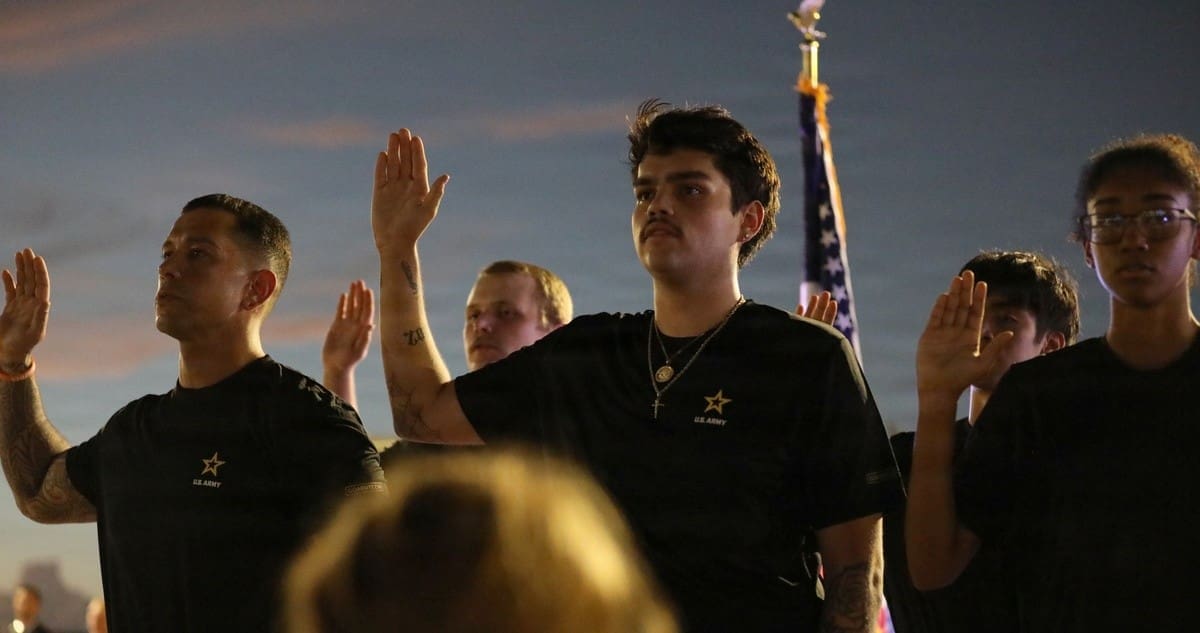
WASHINGTON, DC— In a historic turn of events for military readiness, the U.S. Army has successfully met its recruiting objectives for its most prestigious and elite force for the first time in 15 years.
The service officially fulfilled its recruiting mission for Army Special Forces military occupational specialties (MOS), surpassing its targets to secure critical frontline assets. By the numbers, the Army signed 2,963 recruits for its combined active-duty and accessions mission, comfortably exceeding its Special Forces requirement of 2,839. The successful intake marks the first time the branch has completed its Special Forces recruiting quota since 2011.
Commonly known as the Green Berets, these elite forces are assigned to specialized fields encompassing weapons, intelligence, communications, medical, and tactical operations. The newly minted operators will reinforce units stationed strategically across Washington state, Japan, North Carolina, Kentucky, Florida, and Colorado.
Broad Recruiting Triumphs Across All Components
The Special Forces milestone is not an isolated success; it underscores a broader, systemic turnaround for a branch that previously fought multi-year enlistment deficits. The active-duty Army established its recruiting momentum early, hitting its annual active-duty recruiting targets four months ahead of schedule.
The success extends deep into the secondary components as well:
- The Army Reserve: For the first time in a decade, the Reserve met its strict target of 14,322 recruits.
- The Army National Guard: Exceeding projections, the Guard signed 37,654 recruits against a mission of 37,155—achieving 101.3% of its total fiscal year requirement.
Army Lt. Gen. Johnny Davis, commander of U.S. Army Recruiting Command (USAREC), noted that the overall surge in raw enlistments has given leadership the flexibility to focus heavily on stabilizing core combat career fields, including infantry, field artillery, and armor.
The strategic structure of USAREC has evolved heavily under Davis’s leadership. The command was elevated to a three-star command when it absorbed responsibility for the Center for Initial Military Training, effectively consolidating basic combat training operations under the recruiting umbrella.
“Before, it was … ‘Hey, let’s just fill up basic training and get them off to AIT functional training and then off to units,’” Davis remarked during an Association of the U.S. Army panel. “Now, we’re starting to really focus on the right talent to bring in so they’re sitting in exactly the right MOSs.”
Overhauling Strategy: Cash Incentives and Direct Commissioning
The post-COVID-19 landscape presented severe hurdles for the military, as restricted access to public schools severed standard connections between local communities and recruiters. To counter stagnation, USAREC overhauled its internal corporate culture by prioritizing recruiters’ needs and career paths.
The Army launched aggressive incentive packages to reward high-performing recruiters. The branch immediately promoted 431 eligible sergeants to staff sergeants upon graduation from the Army Recruiter Course. Additionally, the service deployed a one-time lump sum financial bonus of $5,000 for personnel who completed the class within a 120-day window. Davis credited these internally focused operational shifts, alongside the nostalgic return of the iconic “Be All You Can Be” marketing campaign, with reigniting public interest in military service.
Looking ahead, USAREC intends to scale its direct commissioning program to pull civilian professionals straight into the officer ranks. The program is slated to scale up drastically, jumping from a baseline of 50 to 100 officers to a projected target of 300 to 400 commissions. By directly targeting pre-trained civilian specialists, the Army hopes to avoid stripping standard career officers from primary combat arms branches such as the infantry, field artillery, or armor.
The clinical sector is also slated for structural change. Davis revealed plans to place specialized medical recruiters directly onto medical school campuses to secure highly trained doctors. “How do we connect with them?” Davis questioned. “Because there’s doctors who want to serve… There’s a bunch of different specialties in the medical field that we can fill all day and night.”
Super Intelligence Integration Bolsters Enlistment Metrics
To streamline information flow and manage user engagement at scale, the Army has integrated advanced technology into its frontline operations. The service piloted an innovative Super Intelligence (SI) program spearheaded by “Staff Sgt. Star,” an SI-powered virtual chatbot.
While the Army has utilized basic virtual assistance scripts since 2006, the Accessions Information Environment has newly supercharged the platform with high-level SI capabilities. Staff Sgt. Star pulls authoritative, up-to-date data directly from senior Army leadership to serve a baseline of roughly 12,000 active users. Future technical maps indicate that the chatbot will soon evolve beyond answering baseline inquiries, enabling it to directly process and execute complex information tasks for prospective soldiers.
Discover more from Bad Dawg Media Group
Subscribe to get the latest posts sent to your email.