
J.J. Pavlick | New York, NY | October 6, 2026
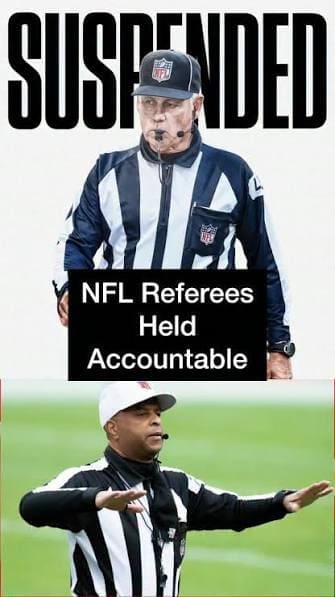
NEW YORK — In the high-stakes theater of the National Football League, officiating has long been the ultimate lightning rod for public scrutiny. Yet, following a highly volatile weekend of on-field incidents, the battle lines have shifted from missed holding calls to executive disciplinary standards. The NFL Referees Association (NFLRA) formally announced its intention to appeal and legally challenge the recent suspensions imposed by the league office on two veteran game officials. Executive Director Scott Green released a detailed statement arguing that while accountability is necessary, the league’s severe disciplinary measures were “excessive and inconsistent with past precedent.” While the union is structurally obligated to defend its members, its defensive posture places the NFLRA on an island isolated from the harsh reality of public broadcast footage, mounting player safety concerns, and universal condemnation.
The administrative core of the union’s defense hinges on the concept of procedural consistency and workplace environment. Green explicitly noted that officials are routinely subjected to highly charged interactions, emotional outbursts, and direct verbal abuse from both players and coaches on a weekly basis. From the union’s perspective, the NFL cannot logically demand flawless professional composure from its under-fire referees while simultaneously minimizing or outright ignoring the toxic conduct directed toward them. However, by attempting to frame clear on-field officiating misconduct as a secondary byproduct of player instigation, the NFLRA is executing a classic labor-union maneuver that fundamentally misreads the severe gravity of the specific infractions witnessed by millions of viewers.
“Holding officials accountable while ignoring or minimizing the conduct directed at them is neither fair nor an effective way to address this issue.”
Scott Green, NFLRA Executive Director
The Unprecedented Clarity of High-Definition Misconduct
The primary reason the NFLRA faces an uphill battle in the court of public opinion is the absolute clarity of the broadcast evidence. The modern NFL viewing experience leaves no room for administrative nuance or institutional shielding; high-definition, multi-angle replays immediately broadcasted the explicit actions of the two disciplined officials to a global audience. The football world reacted with immediate, unified outrage because the individual actions did not represent a marginal, borderline infraction or a simple verbal warning. Instead, the footage revealed a clear, objective breach of basic professional boundaries that instantly compromised the perceived neutrality required of game adjudicators. When fans, media analysts, and former players across the spectrum universally align to condemn the exact same individuals, the narrative ceases to be a subjective debate about league overreach and becomes an undeniable mandate for immediate discipline.
By digging in with resistance to these suspensions, the union inadvertently compromises its own long-term credibility. An official’s entire authority on an NFL field is derived from an unshakeable assumption of absolute control, emotional detachment, and objective fairness. The moment an official actively engages in escalating a physical or verbal confrontation with a player, that essential illusion of authority completely shatters. Denying the severity of these specific videotaped actions signals to the public that the union is more interested in protecting individual jobs than safeguarding the integrity of the sport itself, effectively undermining the very standard of professionalism Green claims to uphold.
A Failure to Harmonize Accountability and On-Field Authority
The NFLRA’s planned strategy to meet with the NFL Players Association (NFLPA) to address growing levels of on-field confrontation is a necessary step, but using it as a leverage tool to reduce valid official discipline is a fundamental misstep. Accountability cannot be a conditional equation where an official’s professionalism is dependent on a player’s good behavior. Referees are explicitly trained, compensated, and empowered with the unique authority to throw penalty flags, assess yardage ejections, and completely disqualify players who cross behavioral lines. Because officials possess the structural mechanics to penalize player misconduct in real-time, they must be held to an immovable, higher standard of behavioral restraint.
Ultimately, the league office had no choice but to hand down severe, swift suspensions to protect the integrity of the shield. Allowing compromised officials to return to the field without significant, visible consequences would set a highly dangerous precedent, signaling to players and coaching staffs that the ultimate arbiters of the game can lose their composure with minimal institutional fallout. In its effort to aggressively defend the principle of fair and proportionate workplace discipline, the NFLRA has chosen the wrong hill to die on. The football world didn’t see a systemic breakdown of league precedent this past weekend; it saw two individual officials completely fail their core responsibilities, and no amount of labor pushback can erase what the cameras already proved.
Discover more from Bad Dawg Media Group
Subscribe to get the latest posts sent to your email.


