CAMDEN, N.J. — John Quinesso didn’t join the Navy for glory. He joined because he was an 18-year-old kid who knew himself.
World War II was raging. Draft boards were pulling boys from towns like Vineland. And Quinesso — small in stature, raised by his grandparents in a broken home — looked at the photos of soldiers wading ashore with rifles held over their heads and made a decision.
“I said, I got to join the Navy,” he recalled.
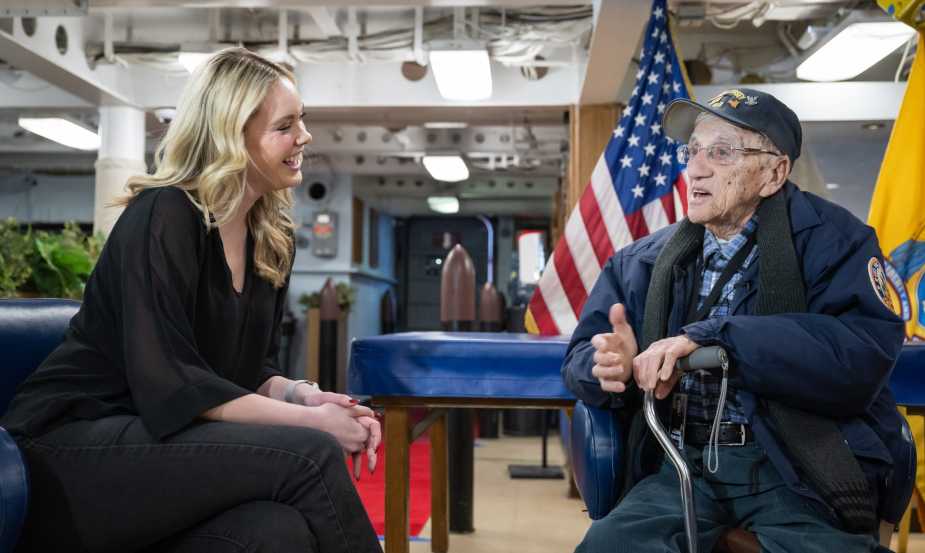
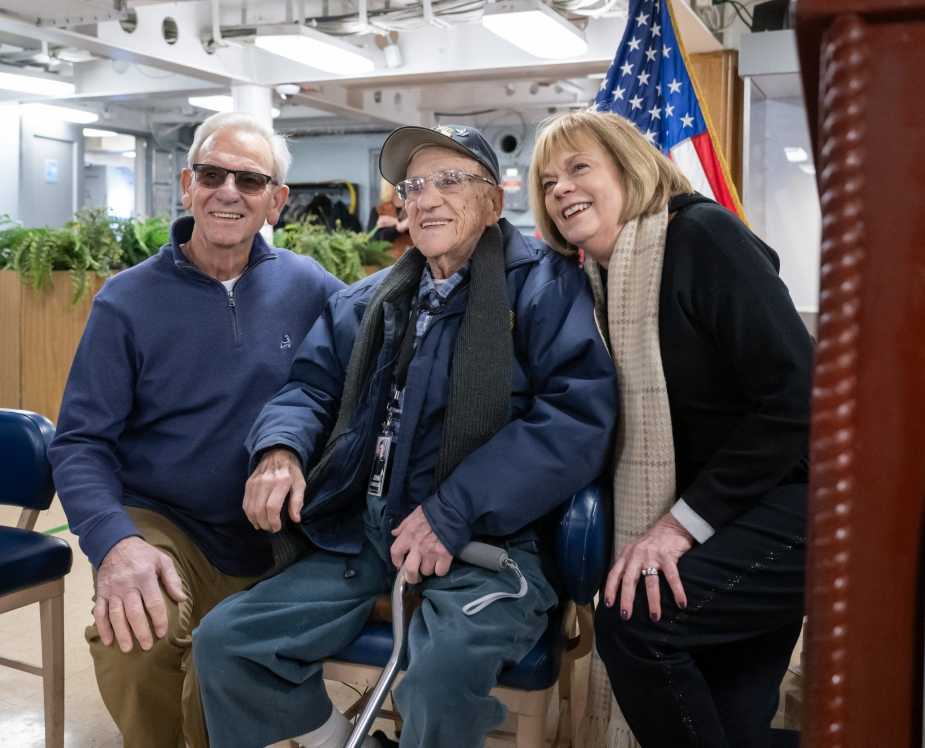
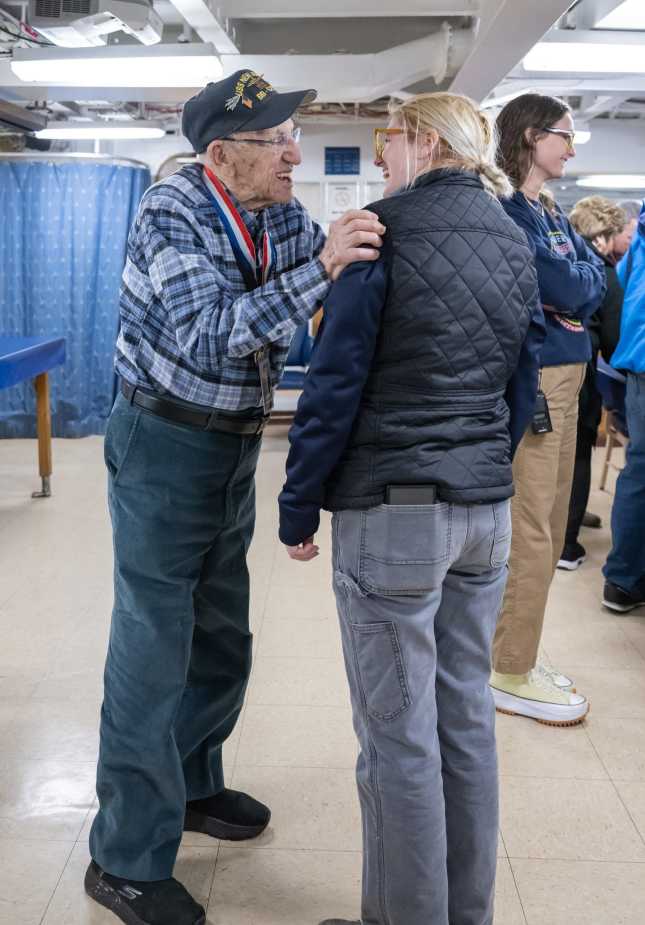
We heard that story where it belonged: aboard the Battleship New Jersey, during Quinesso’s 100th birthday celebration in Camden — a luncheon and recognition ceremony held on the museum ship where he has spent years giving tours and teaching visitors what service actually costs.
His birthday was Jan. 24, but the celebration brought friends and family together on the steel deck of a living monument — the kind of setting that makes a century feel both impossible and completely earned.
They called him “Johnny Q.”
Not because he asked for it. Because a captain couldn’t pronounce “Quinesso” during commissioning, and solved the problem the Navy way: quick, direct, permanent.
The nickname stuck for the rest of his life.
A kid among grown men
On board, most sailors were older, married, with families back home. Quinesso was the kid they took under their wing.
“They taught me a lot of tricks when we went on liberty,” he said. “How to drink and all that stuff. I grew up fast.”
He wasn’t on a destroyer hunting submarines or storming beaches. His ship’s job was essential in a different way: carrying tanks and men to islands after they’d been taken, helping refurbish positions, and keeping the Pacific campaign moving.
The danger still lived in the water.
“All we had to be careful of was landmines,” he said. “If we hit a landmine… It’s blown out of the water. So we always followed minesweepers.”
That was the rhythm: move in, unload, keep the machine running.
Black Rifle Coffee — The Watch Doesn’t End
Johnny Q carried messages that mattered on the midnight shift. Today, your mission might be different — but the standard is the same: stay sharp, stay ready, get it done.
Black Rifle Coffee is built for early mornings, long nights, and the people who still believe in showing up.
The midnight shift in Guam
Quinesso became a radio operator — second class — and the job put him in the nerve center of a ship that lived on messages.
Then came the night that never left him.
He was on the midnight shift in Guam. The U.S. was preparing for the invasion of Japan. The ship was receiving routine weather reports — the kind of drowsy work that makes you fight sleep.
Then a message came in from CINCPAC headquarters.
“I said, oh, I better listen up,” he remembered.
Japan Surrenders
The Japanese had surrendered.
Quinesso ripped the sheet off the typewriter. He was supposed to route it through the proper channels, through the communication officer, through the red tape.
He didn’t.
“I ran down to the captain’s cabin,” he said. “Captain, I got an important message.”
The captain wasn’t amused — not at first.
“Better damn well be important, you just woke me up,” he told the young radioman.
Quinesso stood his ground.
“Well, when you read it, Captain, it will be.”
The captain read the message and hit general quarters.
And then the ship broke open with emotion.
“I’ve seen grown men cry,” Quinesso said. “Men with families back home… because we were getting ready for the invasion of Japan.”
Sailors poured onto the deck in skivvies, hugging, kissing, laughing, sobbing — the kind of release you only get when the future stops being a question mark.
Quinesso still says it plainly.
“I always say Harry Truman saved my life when he dropped the atom bomb.”

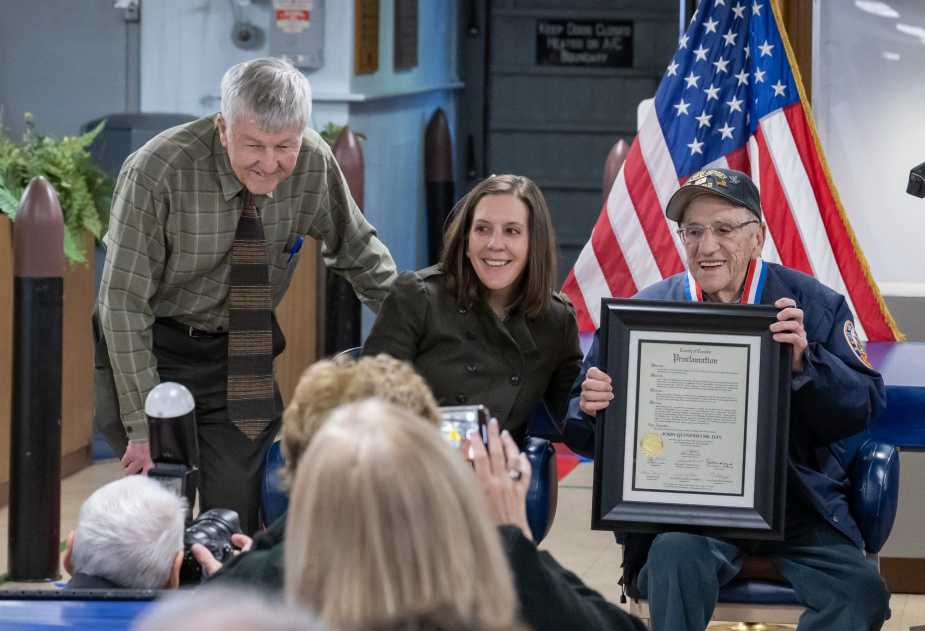
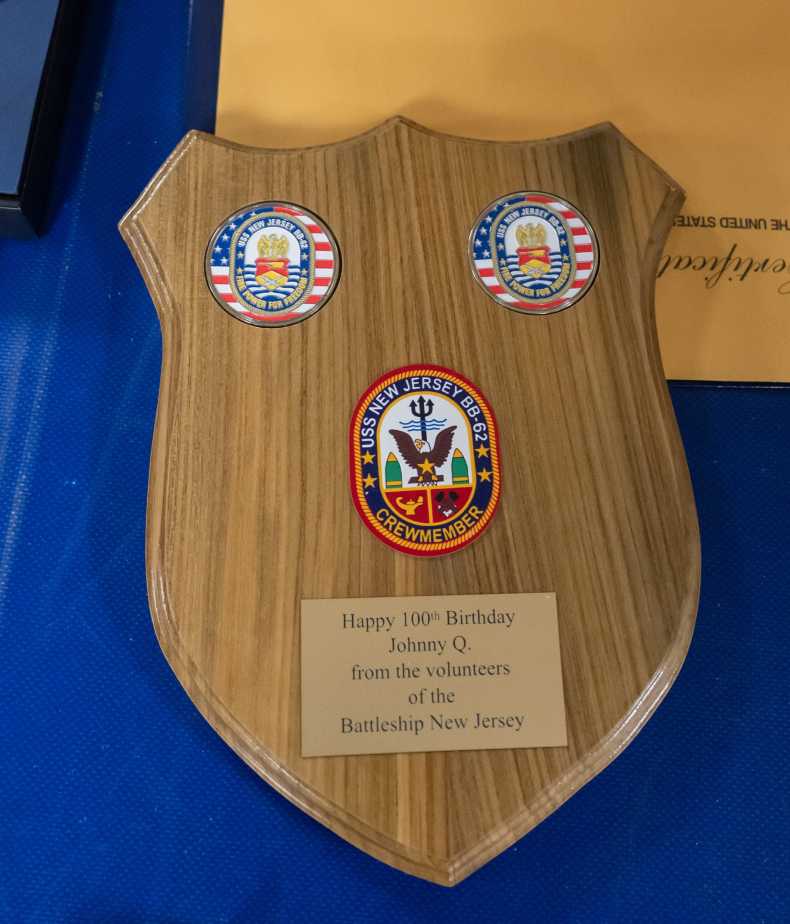
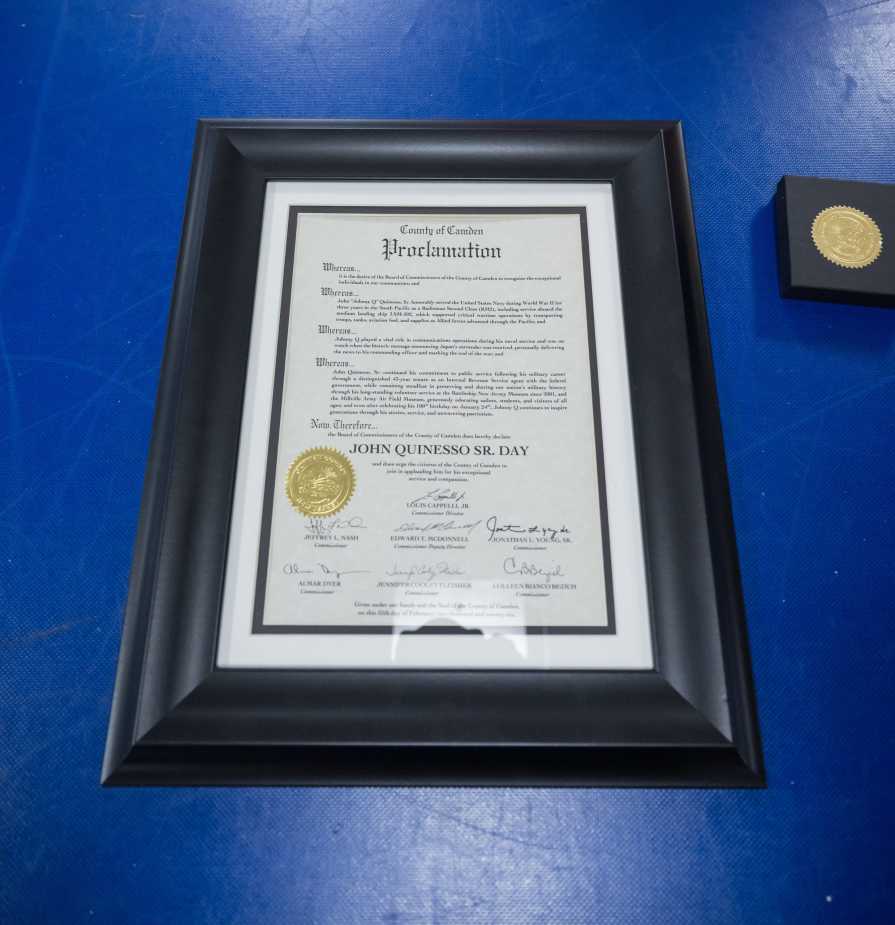
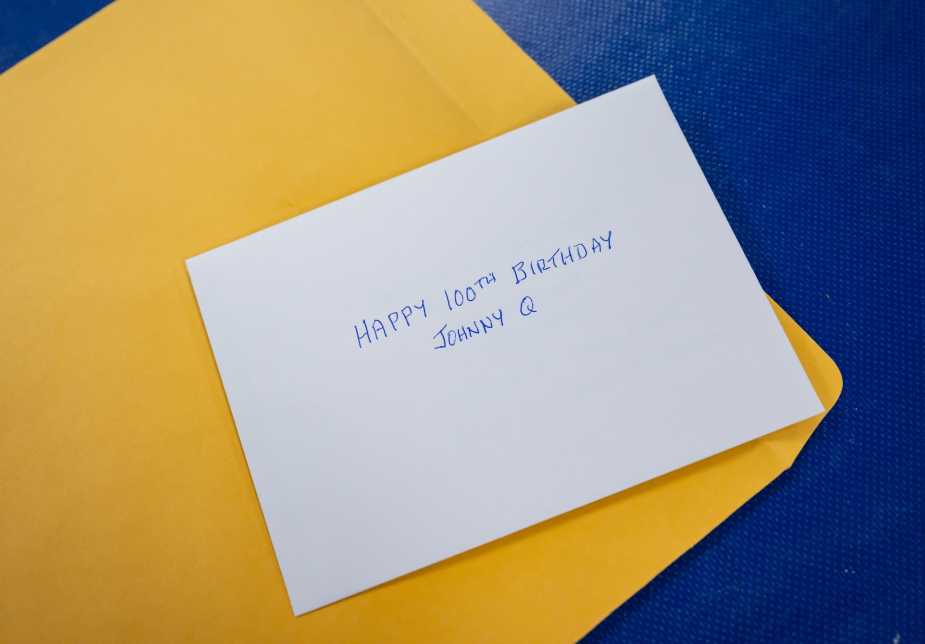
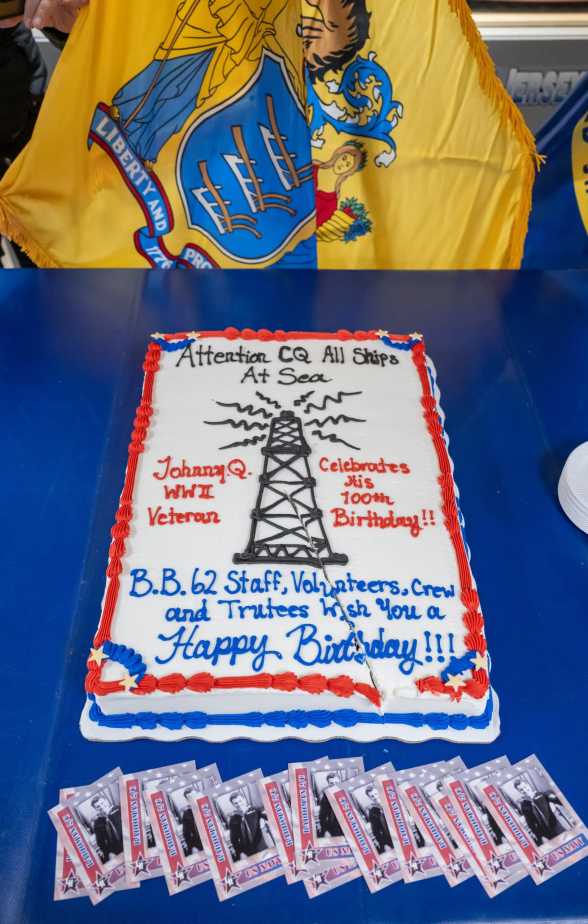
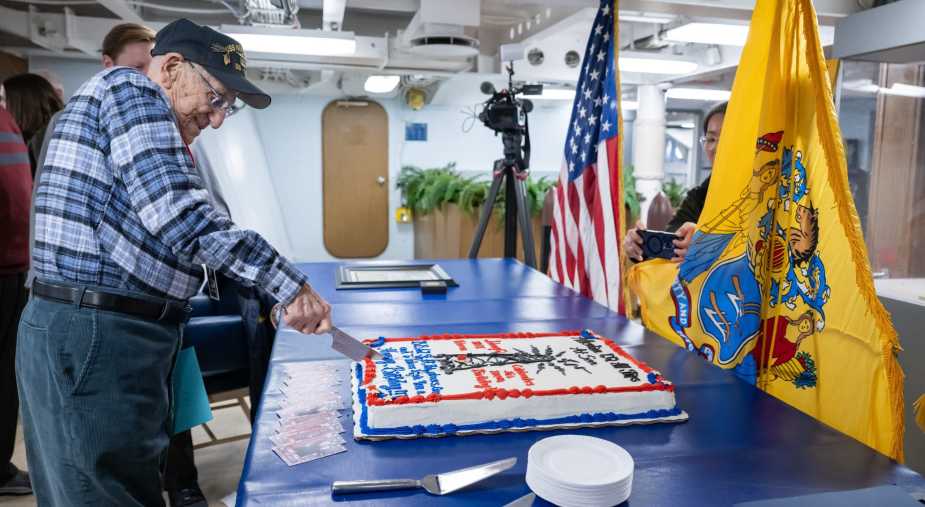
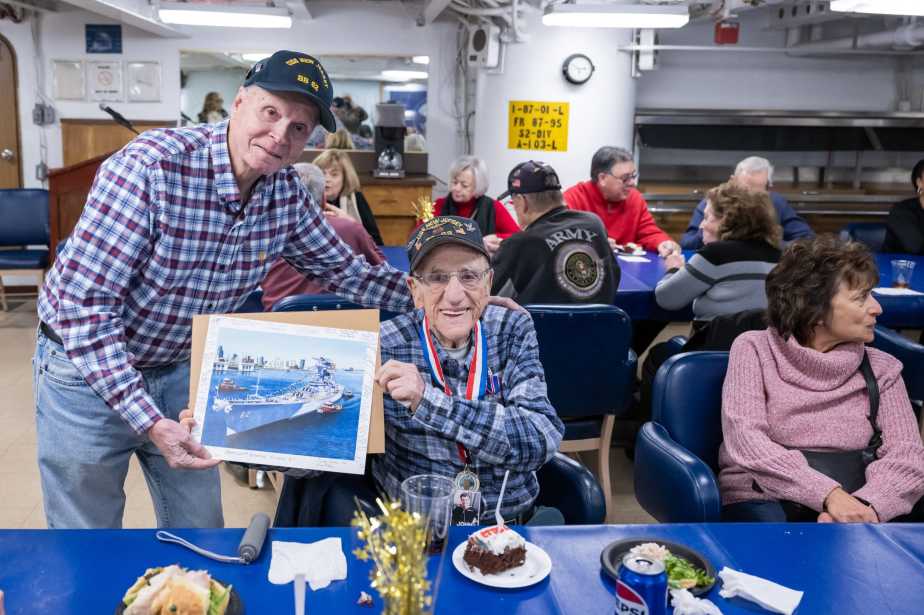
WWII Navy veteran John “Johnny Q” Quinesso Sr. speaks during his 100th birthday celebration aboard the Battleship New Jersey Museum in Camden, N.J. (Mandatory Credit: Battleship New Jersey Museum) WWII Navy veteran John “Johnny Q” Quinesso Sr. poses with guests during his 100th birthday celebration aboard the Battleship New Jersey Museum in Camden, N.J. (Mandatory Credit: Battleship New Jersey Museum) WWII Navy veteran John “Johnny Q” Quinesso Sr. speaks with a guest during his 100th birthday recognition event aboard the Battleship New Jersey Museum in Camden, N.J. (Mandatory Credit: Battleship New Jersey Museum) A speaker addresses the crowd during John “Johnny Q” Quinesso Sr.’s 100th birthday recognition ceremony aboard the Battleship New Jersey Museum in Camden, N.J. (Mandatory Credit: Battleship New Jersey Museum) WWII Navy veteran John “Johnny Q” Quinesso Sr. holds a framed proclamation during his 100th birthday recognition ceremony aboard the Battleship New Jersey Museum in Camden, N.J. (Mandatory Credit: Battleship New Jersey Museum) A commemorative plaque honoring John “Johnny Q” Quinesso Sr.’s 100th birthday is displayed during his recognition event aboard the Battleship New Jersey Museum in Camden, N.J. (Mandatory Credit: Battleship New Jersey Museum) A framed Camden County proclamation declaring “John Quinesso Sr. Day” is displayed during John “Johnny Q” Quinesso Sr.’s 100th birthday recognition event aboard the Battleship New Jersey Museum in Camden, N.J. (Mandatory Credit: Battleship New Jersey Museum) A handwritten “Happy 100th Birthday Johnny Q” note is displayed during John “Johnny Q” Quinesso Sr.’s 100th birthday celebration aboard the Battleship New Jersey Museum in Camden, N.J. (Mandatory Credit: Battleship New Jersey Museum) A cake honoring John “Johnny Q” Quinesso Sr.’s 100th birthday is displayed during his recognition event aboard the Battleship New Jersey Museum in Camden, N.J. (Mandatory Credit: Battleship New Jersey Museum) WWII Navy veteran John “Johnny Q” Quinesso Sr. cuts a birthday cake during his 100th birthday celebration aboard the Battleship New Jersey Museum in Camden, N.J. (Mandatory Credit: Battleship New Jersey Museum) WWII Navy veteran John “Johnny Q” Quinesso Sr. is recognized for his service during his 100th birthday celebration aboard the Battleship New Jersey Museum in Camden, N.J. (Mandatory Credit: Battleship New Jersey Museum)

Mail call and the other message
The war-ending message was the best thing he ever carried.
The worst came in an envelope.
He was back in Guam. It was mail call — the moment everyone waited for because it meant a piece of home.
“Johnny Q got a letter for you,” he remembered.
It was from his fiancée.
A Dear John letter.
“My heart was broken,” he said.
He reacted so strongly that the captain intervened.
“Take him off duty for two weeks,” the captain ordered.
Quinesso stayed in his bunk. He couldn’t think straight — and on a ship where messages mattered, that wasn’t safe.
He later described it with the kind of blunt poetry only a life lived can produce.
“I had a good thing, taking a message that the war was over,” he said. “And I had a bad thing, taking a message that my life was over.”
It wasn’t. Not even close.
The ring, the goodbye, and Rosie
When he got home, Quinesso didn’t chase closure. He went for clarity.
He drove to Wildwood, New Jersey, got the ring back, and ended it.
“OK, give me the ring. Goodbye. Case closed.”
Then he met Rosie.
Not at a dance hall. Not at a party. At a drugstore.
Sunray Drug — the mid-century version of a CVS — where Rosie worked as a cosmetician. A friend brought him in to meet his girlfriend. Rosie was with her.
They invited him to the movies.
He said yes.
“The rest is history,” he said.
They married in Vineland. Rosie passed away 10 to 15 years ago, but the way he says her name still carries the weight of a lifetime.
A century of perspective
Quinesso doesn’t talk like a man chasing praise. In fact, he rejects it.
“Believe me, I’m no hero,” he said. “Those men that hit those beaches… they were the heroes.”
He saw the aftermath when his ship arrived — the devastation, the bodies, the cost.
“The ones who came in first were just shot down like flies,” he said. “But the other guy just came walking over them.”
That memory is why he speaks about service the way he does.
He believes young people should experience some form of military training — not as a slogan, but as a shaping force.
“I went into the Navy as a cocky young teenager,” he said. “And when I came out of the Navy, I was a grown up mature young man.”
The life after war: IRS, the museum, and a medal
Quinesso’s service didn’t end when he came home.
He built a 43-year career as an IRS agent, then found a second mission when the Battleship New Jersey reopened as a museum in 2001. For more than two decades, he has volunteered aboard the ship, guiding tours and sharing what he saw — not to glorify war, but to explain the price of freedom.
During the birthday ceremony in Camden, Quinesso was also recognized with the New Jersey Distinguished Service Medal, the state’s highest military honor.
It was a fitting moment: a radioman who once carried the message that ended a war, now honored on a battleship turned classroom — still teaching, still serving, still showing up.
The family he’s proud of
Quinesso and Rosie had three children. Two were stillborn. Their son survived — “Johnny Q2,” as he’s known.
Today, his son is a professor in the Department of Education at Rowan, successful and settled — the kind of outcome Quinesso talks about with unmistakable pride.
“He’s a smart boy,” he said.
The key he kept
There’s one object Quinesso still holds onto: the Morse code key he used to send messages.
“That’s my very key that was on the ship,” he said.
He admits he took it when the ship was headed for dry dock.
“I stole this off the radio shack,” he said, then caught himself. “Don’t tell nobody.”
He laughed.
“I’d never part with that.”
It’s a small piece of metal and memory — a reminder that history isn’t only made by the men in the first wave.
Sometimes it’s carried by the youngest sailor on the ship, on the midnight shift, listening carefully when the message finally comes through.
Bad Dawg Sports — Real reporting. Real access. No fluff.
Get the Bad Dawg Sports Newsletter for just $2/year and never miss a recap, a result, or a story the mainstream skips.
Discover more from Bad Dawg Sports - Global Sports Coverage & Analysis
Subscribe to get the latest posts sent to your email.