


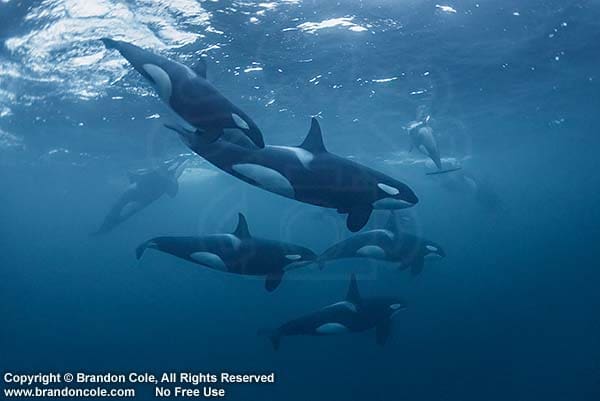
Meet Orcinus orca – the ocean’s most formidable and fascinating apex predator. These black-and-white beauties aren’t just the most prominent members of the dolphin family; they’re sophisticated hunters, devoted family members, and surprisingly complex social creatures that will blow your mind.
Size Matters: Orcas Are Absolute Units
Let’s start with the jaw-dropping basics. Adult male orcas can reach up to 32 feet long and weigh as much as 6 tons – that’s roughly the weight of four average cars! Females are slightly smaller but still impressive, measuring up to 28 feet and weighing 4 tons. Their iconic dorsal fins? Males sport towering 6-foot-tall fins that can be spotted from miles away, while females have more curved, 3-foot fins.
Brain Power That Rivals Humans
Here’s where it gets wild: orcas have the second-largest brain of any marine mammal, weighing up to 15 pounds. However, size isn’t everything – their brain-to-body ratio suggests intelligence levels that scientists are still trying to understand fully. They’ve been observed using tools, teaching complex hunting techniques to their young, and even showing what appears to be grief when a family member dies.
The Ultimate Family Values
Forget everything you know about family dynamics – orcas take it to the next level. They live in matriarchal societies where sons stay with their mothers for life. Yes, you read that right – male orcas are the ultimate mama’s boys! These family groups, known as pods, can comprise up to 40 individuals spanning four generations.
Hunting Strategies That Would Make Navy SEALs Jealous
Orcas have developed hunting techniques so sophisticated they’re basically the ocean’s special forces:
- Intentional stranding: They beach themselves to catch seals, then wiggle back into the water
- Wave washing: Creating waves to knock prey off ice floes
- Carousel feeding: Working together to herd fish into tight balls
- Coordinated attacks: Different pods have developed unique hunting “cultures” passed down through generations
Speed Demons of the Deep
Think you’re fast? Orcas can reach speeds of 35 mph in short bursts – faster than most boats! They can also dive to depths of 500 feet and hold their breath for up to 17 minutes. Their streamlined bodies and powerful tail flukes make them incredibly efficient swimmers.
Communication That Puts Your Group Chat to Shame
Each orca pod has its unique dialect – basically, their language! They use a combination of clicks, whistles, and calls that can travel for miles underwater. Scientists have identified distinct “accents” in different regions, and mothers teach their calves the family’s specific vocal patterns.
Lifespan That Defies Expectations
Female orcas can live up to 100 years, while males typically reach 50-60 years. What’s fascinating is that females go through menopause around age 40 but continue living for decades – they’re among the few species besides humans where post-reproductive females play crucial roles in group survival.
Global Citizens with Local Preferences
Orcas are found in every ocean on Earth, from the Arctic to Antarctica. However, different populations have evolved distinct preferences:
- Residents: Fish-eaters with stable family groups
- Transients: Marine mammal hunters that travel in smaller groups
- Offshore: Deep-water dwellers about whom we know surprisingly little
The Apex Predator That Fears Nothing
Orcas have no natural predators as adults. They’ve been known to hunt great white sharks, blue whales (the largest animals on Earth), and pretty much anything else in the ocean. Great whites flee areas when orcas are present – talk about respect!
Conservation Reality Check
Despite their prowess, orcas face serious challenges. The Southern Resident population near the Pacific Northwest has dwindled to only 73 individuals as of 2023. Threats include pollution, boat noise, and declining salmon populations – their preferred food source.
Cultural Phenomena
Different orca populations have developed distinct cultures:
- Some populations in Argentina have learned to hunt elephant seal pups on beaches
- Norwegian orcas follow herring migrations and have developed specific feeding techniques
- New Zealand orcas have been observed playing with stingrays like frisbees
Surprising Dietary Habits
While often called “killer whales,” orcas are incredibly picky eaters. Some populations eat only fish, while others specialize in marine mammals. Transient orcas have been observed eating the tongues of gray whales and leaving the rest – talk about gourmet dining!
Physical Powerhouses
An orca’s bite force reaches 19,000 pounds per square inch – enough to crush a small car. Their 40-50 conical teeth, each up to 4 inches long, are perfectly designed for gripping slippery prey.
Emotional Intelligence
Orcas display complex emotions including joy, grief, and frustration. They’ve been observed carrying dead calves for days, playing with kelp and other objects, and showing what appears to be empathy toward other species – including humans.
The Ultimate Ocean Athletes
These marine mammals can leap up to 15 feet out of the water in spectacular displays called breaching. They’re also incredibly agile, able to change direction rapidly despite their massive size.
The Bottom Line
Orcas aren’t just impressive predators – they’re complex, intelligent beings with rich social lives, distinct cultures, and remarkable adaptability. As we continue studying these magnificent creatures, one thing becomes clear: we’re only scratching the surface of understanding the actual depth of orca intelligence and social complexity.
Next time you see footage of these black-and-white beauties, remember – you’re looking at one of the ocean’s most sophisticated residents, complete with family drama, cultural traditions, and hunting skills that would make any apex predator jealous.

Discover more from Bad Dawg Media Group
Subscribe to get the latest posts sent to your email.