

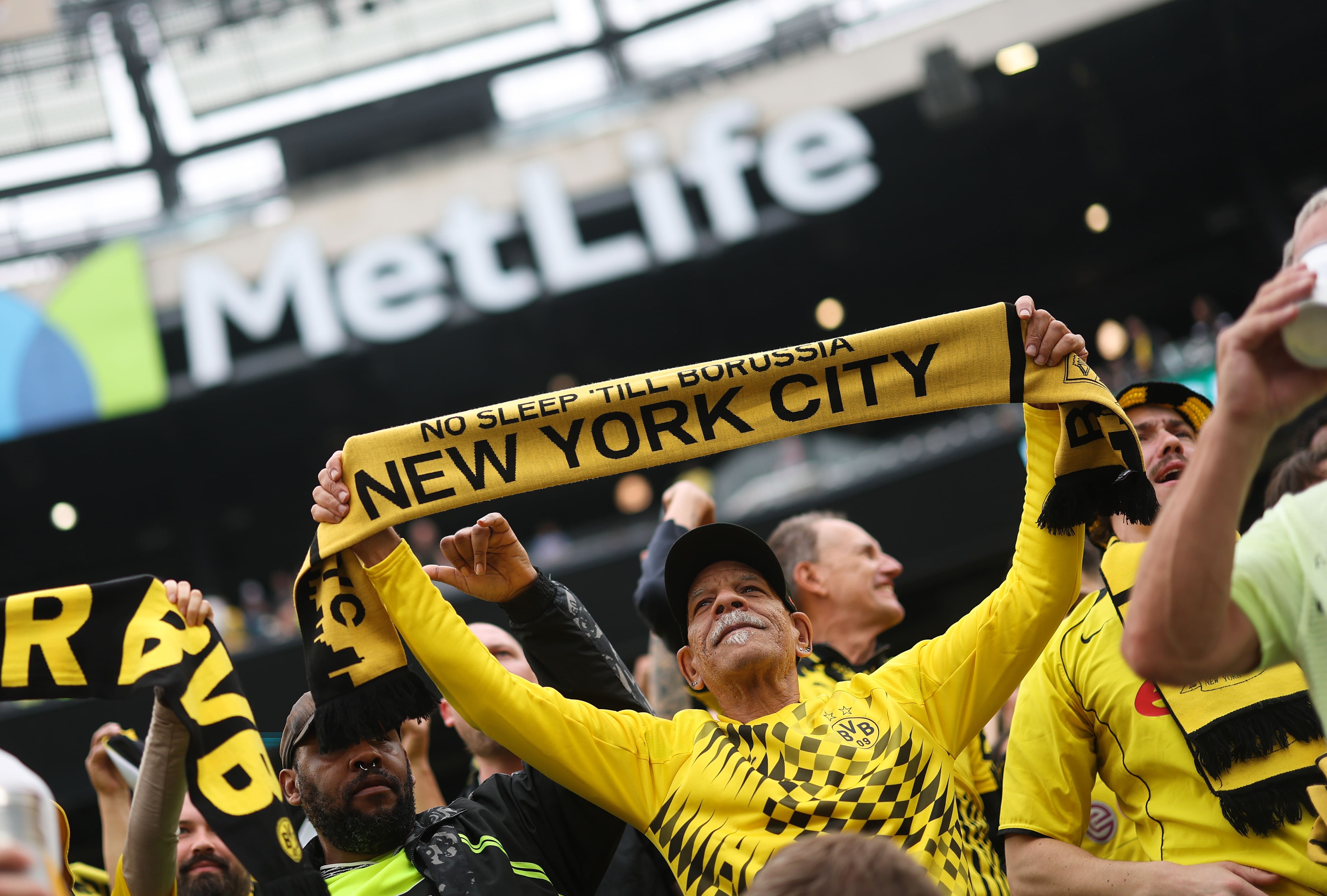
East Rutherford, NJ– MetLife Stadium in East Rutherford witnessed a tale of missed opportunities and goalkeeping brilliance as Fluminense and Borussia Dortmund played out a compelling 0-0 draw, leaving the Brazilian side wondering what might have been. In front of 34,736 passionate supporters, Gregor Kobel’s exceptional performance between the posts overshadowed even Jobe Bellingham’s much-anticipated Club World Cup debut, as the Swiss goalkeeper single-handedly denied Fluminense a deserved victory.
Match Overview: When Brilliance Meets Frustration
This Group F opener epitomized the fine margins that define elite football. Fluminense’s attacking intent and creative superiority met an immovable object in Kobel, whose five crucial saves transformed what should have been a comfortable Brazilian victory into a frustrating stalemate that keeps both teams’ qualification hopes delicately balanced.
Key Match Statistics:
- Possession: Fluminense 45.5% – Dortmund 54.5%
- Shots on Target: Fluminense 5 – Dortmund 3
- Total Shots: Fluminense 14 – Dortmund 7
- Corner Kicks: Fluminense 7 – Dortmund 3
- Saves: Fluminense 3 – Dortmund 5
- Yellow Cards: Both teams 2
The Kobel Show: Goalkeeping Excellence Redefined
A Performance for the Ages
Gregor Kobel’s display will be remembered as one of the Club World Cup’s defining individual performances. The Swiss international’s five saves weren’t just routine stops – they were moments of brilliance that showcased why elite goalkeeping can single-handedly change match outcomes.
Kobel’s Key Saves:
- 17th Minute: Spectacular save from Jhon Arias’s top-corner bound effort
- 36th Minute: Another crucial stop to deny Arias
- 69th Minute: Powerful save from Everaldo’s long-range strike
- 71st Minute: Remarkable double-save sequence, first denying Everaldo then blocking Nonato’s follow-up
Technical Analysis of Kobel’s Performance
Performance Statistics:
- Saves: 5 (100% save rate)
- High Claims: 4/4
- Distribution Accuracy: 78%
- Sweeper Actions: 3
- Commands of Area: 8
Kobel’s positioning throughout the match was exemplary, consistently narrowing angles and anticipating Fluminense’s attacking patterns. His distribution, while not spectacular, was effective in relieving pressure and initiating Dortmund’s counter-attacks.
Jobe Bellingham’s Debut: Following in Famous Footsteps
The Bellingham Legacy Continues
The 19-year-old midfielder’s 60th-minute introduction marked a significant moment for both player and club. As the younger brother of Real Madrid superstar Jude Bellingham, expectations were naturally high, but Jobe’s debut performance suggested a player ready to forge his own path.
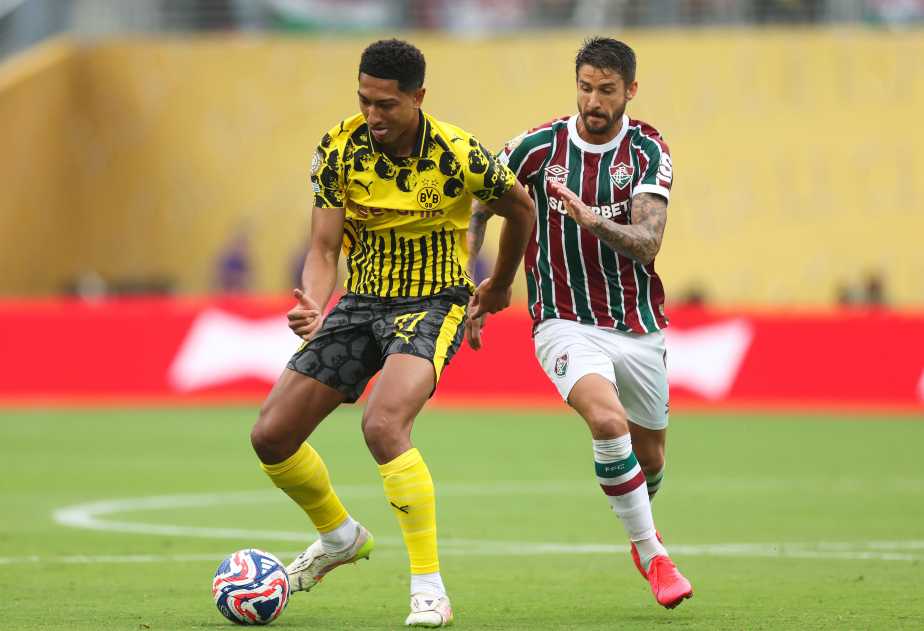
Debut Statistics (30 minutes):
- Touches: 23
- Pass Accuracy: 87%
- Duels Won: 3/5
- Tackles: 2
- Key Passes: 1
Tactical Impact
Bellingham’s introduction provided Dortmund with fresh energy in midfield, his pressing and ball-winning ability helping to disrupt Fluminense’s rhythm during a period when the Brazilian side was building dangerous momentum.
Tactical Analysis: Contrasting Philosophies Create Compelling Chess Match
Fluminense’s 4-3-3: Brazilian Flair Meets European Structure
Under the guidance of legendary defender Thiago Silva, Fluminense deployed a formation that balanced traditional Brazilian creativity with modern tactical discipline.
Formation Breakdown:
- Goalkeeper: Fábio – Solid performance, limited opportunities to shine
- Defense: Samuel Xavier, Thiago Silva, Juan Freytes, René
- Midfield: Hércules, Martinelli, Nonato – Energy and creativity
- Attack: Jhon Arias, Everaldo, Agustín Canobbio – Pace and directness
The Thiago Silva Factor
The former PSG and Chelsea defender’s presence was felt throughout the match. His leadership, positioning, and distribution from the back provided Fluminense with the foundation to dominate territorially and create numerous chances.
Silva’s Impact:
- Pass Accuracy: 94%
- Long Balls: 8/10 completed
- Aerial Duels: 5/6 won
- Clearances: 4
- Leadership: Constant communication and organization
Dortmund’s 3-4-2-1: Defensive Solidity Meets Counter-Attack Threat
Dortmund’s formation reflected their pragmatic approach to this challenging fixture:
Formation Analysis:
- Goalkeeper: Gregor Kobel – Man of the match performance
- Defense: Waldemar Anton, Ramy Bensebaini, Niklas Süle
- Wing-backs: Daniel Svensson, Julian Ryerson
- Midfield: Pascal Groß, Marcel Sabitzer
- Attack: Julian Brandt, Karim Adeyemi, Serhou Guirassy
Key Moments: When Chances Define Destiny
First Half Dominance: Fluminense’s Missed Opportunities
The opening 45 minutes belonged entirely to Fluminense, with the Brazilian side creating chance after chance only to be denied by Kobel’s brilliance.
17th Minute – Arias vs Kobel I: The Colombian winger’s curling effort toward the top corner seemed destined for the net until Kobel’s acrobatic save.
34th Minute – Martinelli’s Near Miss: The midfielder’s effort missed by inches, highlighting Fluminense’s precision in the final third.
36th Minute – Arias vs Kobel II: Another excellent save from the Swiss goalkeeper maintained the deadlock.
Second Half Drama: The Double-Save Sequence
The match’s defining moment came in the 69th-71st minute sequence when Kobel produced heroics that defied belief:
- Everaldo’s Power Shot: Denied by a strong save
- Nonato’s Follow-up: Blocked at point-blank range
- Defensive Recovery: Dortmund cleared the danger
This sequence epitomized Fluminense’s frustration and Kobel’s excellence.
Individual Performances: Stars and Frustrations
Jhon Arias – The Creative Catalyst
The Colombian winger was Fluminense’s most dangerous player, consistently creating problems for Dortmund’s defense:
Performance Statistics:
- Shots: 4 (2 on target)
- Key Passes: 3
- Dribbles: 5/7 completed
- Crosses: 6 (2 accurate)
- Duels Won: 7/11
Arias’s pace and directness caused constant problems, and on another day, his efforts would have been rewarded with goals.
Thiago Silva – The Veteran Leader
The 40-year-old defender’s performance showcased why experience matters at the highest level:
- Pass Accuracy: 94%
- Aerial Duels: 5/6 won
- Interceptions: 3
- Long Balls: 8/10 completed
Silva’s leadership and distribution were crucial in Fluminense’s territorial dominance.

Pascal Groß – Dortmund’s Midfield Anchor
The German midfielder’s experience and positioning helped Dortmund weather Fluminense’s storm:
- Pass Accuracy: 91%
- Tackles: 3
- Interceptions: 4
- Key Passes: 2
Serhou Guirassy – Isolated but Dangerous
The striker’s limited service reflected Dortmund’s defensive approach, but his hold-up play was crucial:
- Touches: 34
- Aerial Duels: 4/6 won
- Shots: 1
- Fouls Won: 3

Tactical Insights: The Beautiful Game’s Complexities
Fluminense’s Attacking Patterns
The Brazilian side’s approach showcased modern attacking football at its finest:
- Wide Overloads: Consistent 2v1 situations in wide areas
- Central Penetration: Martinelli and Nonato’s forward runs
- Set-Piece Threat: Seven corners created numerous opportunities
- Quick Transitions: Rapid switches from defense to attack
Dortmund’s Defensive Discipline
The German side’s approach demonstrated tactical maturity:
- Compact Shape: Maintained narrow defensive lines
- Midfield Screen: Groß and Sabitzer protected the defense
- Counter-Attack Readiness: Quick transitions through Adeyemi and Brandt
- Goalkeeper Distribution: Kobel’s long kicks bypassed pressure
The Possession Paradox
Despite Dortmund’s 54.5% possession advantage, Fluminense created superior chances (14 shots to 7). This statistical anomaly highlighted the difference between territorial control and attacking threat.
Atmospheric Analysis: Brazilian Passion in New Jersey
Fluminense’s Traveling Support
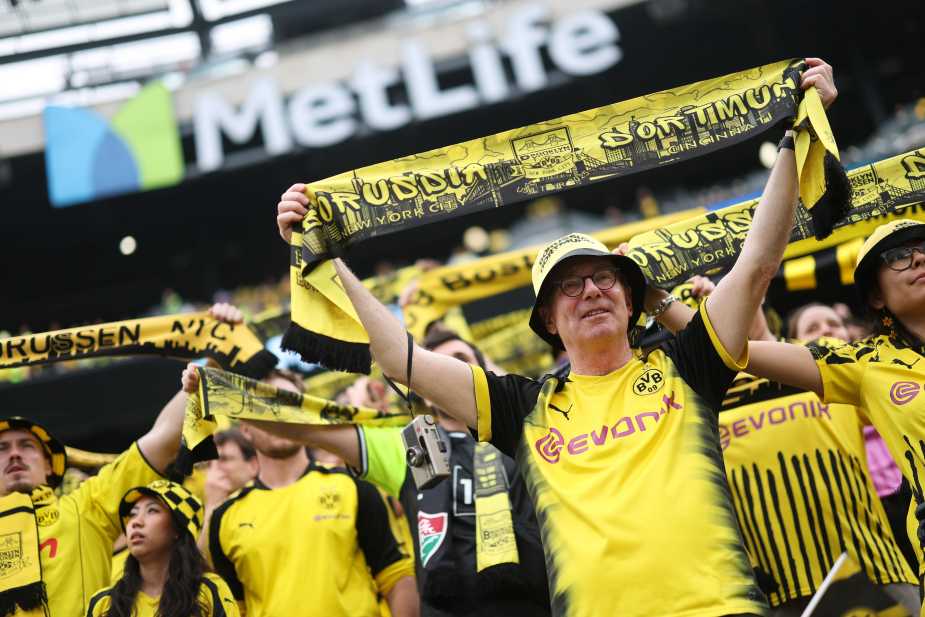
The sight of flag-waving Fluminense supporters transforming MetLife Stadium into a little Rio de Janeiro provided one of the match’s most compelling subplots. Their passionate support created an atmosphere that belied the modest 34,736 attendance in the 82,000-capacity venue.

EAST RUTHERFORD, NEW JERSEY – JUNE 17: Fans of Fluminense FC cheer outside of the stadium prior to the FIFA Club World Cup 2025 group F match between Fluminense FC and Borussia Dortmund at MetLife Stadium on June 17, 2025 in East Rutherford, New Jersey. (Photo by Carl Recine – FIFA/FIFA via Getty Images) EAST RUTHERFORD, NEW JERSEY – JUNE 17: Fans of Fluminense FC cheer outside of the stadium prior to the FIFA Club World Cup 2025 group F match between Fluminense FC and Borussia Dortmund at MetLife Stadium on June 17, 2025 in East Rutherford, New Jersey. (Photo by Carl Recine – FIFA/FIFA via Getty Images)


Weather Conditions
The overcast skies and mild temperatures provided relief from the scorching heat affecting other tournament venues, allowing both teams to maintain high intensity throughout the 90 minutes.
Group F Implications: Everything Still to Play For
Current Group F Landscape
This draw leaves Group F wide open, with both teams earning valuable points while highlighting the competitive balance that makes this group one of the tournament’s most intriguing.
Upcoming Fixtures
- Dortmund vs Mamelodi Sundowns (Cincinnati) – German efficiency meets South African determination
- Fluminense vs Ulsan HD (MetLife Stadium) – Brazilian flair against Korean discipline
Form Analysis: Momentum Meets Reality
Fluminense’s Positive Trajectory
The Brazilian side entered this match in excellent form:
Recent Results: W-W-W-W-D
- Internacional 0-2 Fluminense (Serie A)
- Fluminense 2-0 Once Caldas (Sudamericana)
- Fluminense 2-1 Vasco da Gama (Serie A)
- Aparecidense 1-4 Fluminense (Copa do Brasil)
- Juventude 1-1 Fluminense (Serie A)
This strong domestic form translated into confident attacking play against European opposition.
Dortmund’s Bundesliga Success
The German side’s recent form showed consistent quality:
Recent Results: W-W-W-W-W
- Dortmund 3-0 Holstein Kiel (Bundesliga)
- Bayer Leverkusen 2-4 Dortmund (Bundesliga)
- Dortmund 4-0 VfL Wolfsburg (Bundesliga)
- TSG Hoffenheim 2-3 Dortmund (Bundesliga)
- Dortmund 3-2 Borussia Mönchengladbach (Bundesliga)
This perfect run demonstrated the quality that earned their Club World Cup qualification.
Statistical Deep Dive: Numbers Behind the Narrative
Shot Quality Analysis
- Fluminense xG: Approximately 2.3
- Dortmund xG: Approximately 0.8
- Big Chances Created: Fluminense 4, Dortmund 1
The Expected Goals figures reflected Fluminense’s dominance and Kobel’s exceptional performance in denying high-quality chances.
Defensive Actions
- Tackles: Fluminense 14, Dortmund 18
- Interceptions: Fluminense 8, Dortmund 12
- Clearances: Fluminense 16, Dortmund 22
Dortmund’s higher defensive numbers reflected their reactive approach and the pressure they faced.
Set-Piece Battle
Fluminense’s 7-3 advantage in corner kicks highlighted their territorial dominance, though they couldn’t convert these opportunities into goals.
Cultural Significance: Global Football’s Beautiful Diversity
Brazilian Football’s Evolution
This performance showcased the evolution of Brazilian football – maintaining traditional creativity while incorporating European tactical discipline. Fluminense’s approach demonstrated how South American teams can compete with European tactical sophistication.
German Efficiency Meets South American Flair
The tactical battle represented a fascinating clash of footballing philosophies, with German organization and efficiency meeting Brazilian creativity and passion.
Looking Ahead: Tournament Implications
Fluminense’s Confidence Builder
Despite the frustration of missed chances, this performance against quality European opposition should boost Fluminense’s confidence for their remaining group matches.
Dortmund’s Defensive Foundation
The clean sheet provides a solid foundation for Dortmund’s tournament campaign, though their attacking output will need improvement against stronger opposition.
Conclusion: When Excellence Meets Frustration
The 0-0 draw between Fluminense and Borussia Dortmund at MetLife Stadium was a masterclass in contrasts – attacking brilliance meeting defensive excellence, Brazilian creativity confronting German efficiency, and individual heroics determining collective outcomes.
Gregor Kobel’s performance will be remembered as one of the Club World Cup’s defining individual displays. His five saves weren’t just routine stops but moments of brilliance that showcased why elite goalkeeping can single-handedly change match outcomes.
For Fluminense, this result represents both frustration and encouragement. Their attacking display demonstrated they belong at this level, but their inability to convert superiority into goals highlighted the fine margins that define elite competition.
Jobe Bellingham’s debut provided a compelling subplot, with the young midfielder showing glimpses of the quality that runs in the family. His introduction energized Dortmund during a crucial period and suggested a bright future for both player and club.
As Group F develops, this draw sets up intriguing scenarios for both teams. Fluminense’s attacking quality suggests they’ll create chances against any opposition, while Dortmund’s defensive solidity provides a foundation for tournament success.
The beautiful game was on full display in New Jersey, complete with all its drama, quality, and unpredictability. Sometimes football’s greatest stories aren’t written by goal scorers but by the goalkeepers who deny them, and Gregor Kobel authored one of those stories at MetLife Stadium.
Discover more from Bad Dawg Sports - Global Sports Coverage & Analysis
Subscribe to get the latest posts sent to your email.