


Beneath Olympic spotlights, Cortina’s curling rink crackles with anticipation. Ice shimmers, brooms lie ready, and the hush of eager spectators hovers above swirling breaths in the chill. Shoes squeak against the pebbled surface, every glide drawing eyes to the center stage—this is no ordinary match.
Cortina Bay, ITA – When the Winter Olympics kicked off in Milan/Cortina, my editor asked which sport I’d like to cover besides Ice Hockey. I immediately chose Curling, a sport I’ve followed since its return to the Olympics in 1998 in Nagano. Watching it is fascinating—like Shuffleboard on Ice—and covering it here has been both exciting and fun. While I’m still learning the finer points, including what makes a foul, something peculiar has caught my attention and the entire curling world: a recent controversial match that everyone is talking about.
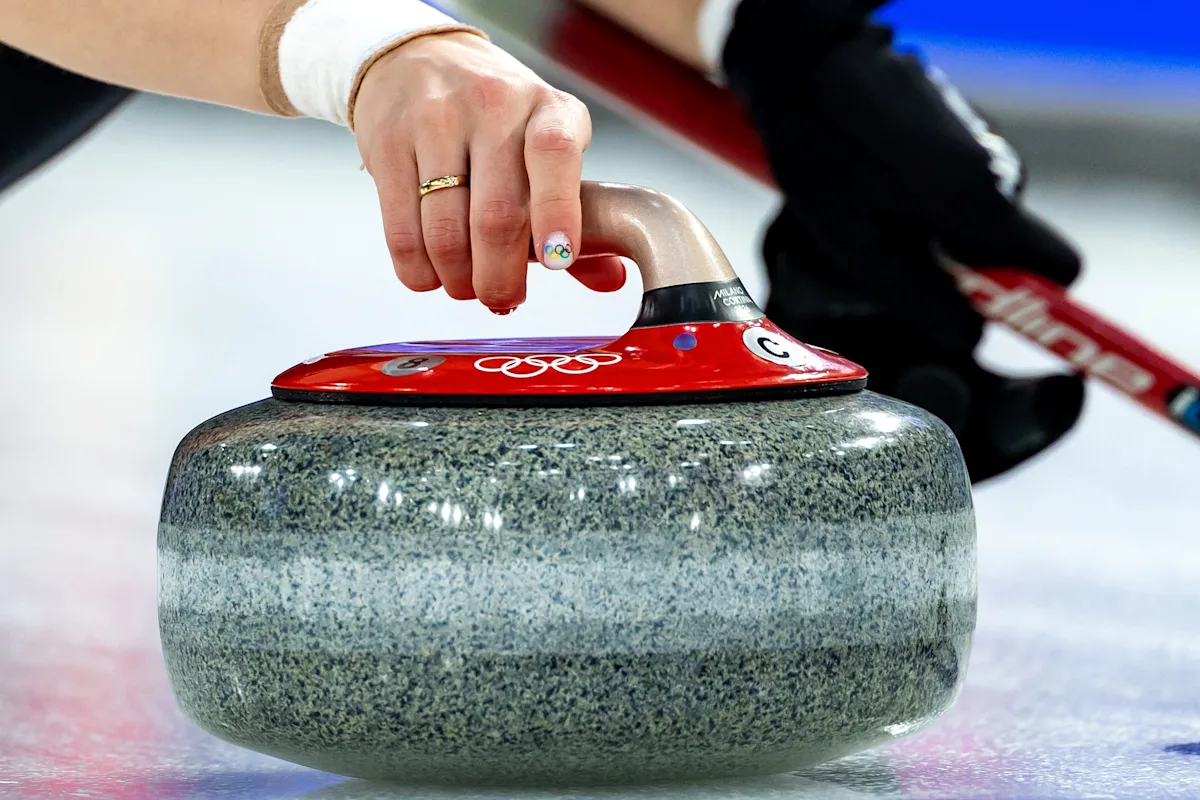
It was the second match of the day, with Canada facing Sweden after the USA had been defeated in the morning session. Throughout the match, when Marc Kennedy was the third curler to throw the stones down the sheet, something peculiar was going on. After releasing the handle on the top of the stone, Kennedy extended his index finger and pointed at the stone. Now, at first, I thought he was mentally giving the stone directions, trying to will it to get a solid hit, to place it in the house, or to avoid making a mistake. Athletes sometimes have superstitions to help them perform well before or during a game, regardless of the sport.
The Swedish team informed the umpires that something was off every time Kennedy threw the fifth and sixth stones. In the ninth end, tensions rose: Oskar Eriksson confronted Kennedy at center ice, the exchange audible to all. Eriksson accused, “That’s a double-touch! You can’t keep doing that!” Kennedy shot back with an “YOU CAN F**K OFF!”, denying any cheating. Their confrontation echoed throughout the arena and to viewers worldwide.
As a newcomer to curling, I wanted to understand the controversy. In curling, players must release the stone before crossing the hog line, much like a foul line in bowling. If they don’t, it’s a violation, and the throw doesn’t count. That’s the core rule under dispute here.
A replay of the incident, which you can find at the link below, shows a close-up in slow motion right after Kennedy’s release, where it appears his fingertip may brush against the stone below the handle as it travels down the ice. The debate is whether this moment violated the rules or was a close call, nearly breaking them. The verdict among World Curling and its fans is that Canada should’ve been punished for this second touch.
Once the stone is released and crosses the hog line, the stone can’t be touched for a second time. That would result in the removal of that stone by the umpires. But something else has also been seen in the rules, and it’s something I never thought would be possible. When a stone is in play, the curler can only touch the handle and not the actual stone itself while crossing the hog line. If that happens, the stone is removed as well. In the video replays I have seen on social media, which came directly from NBC and the IOC, after Kennedy released the stone, he extended his index finger, and it looked like he was actually touching the stone well below the handle. It looked like he was giving it an extra push after his release.
That’s what angered and upset the Swedish Curling Team. That’s why Eriksson told Kennedy why he and his teammates believed there was some cheating going on. After the match ended and everyone calmed down, ready to fight the next day, Canada faced Switzerland on Valentine’s Day, and once again, there was the same controversy: the Swiss players were watching Kennedy and Canada with the same issues that Sweden had. They told their coaches and the umpires that they would write a letter to World Curling, the sport’s official governing body, about this issue.
I have to go back during the Mixed Doubles when USA’s Korey Dropkin was trying to sweep his stone during the Semi-Final match against the Italians, and by accident, he just grazed the guard at the top right just outside the house. He quickly turned to his opponents and apologized for not seeing their stone, and although it barely moved, he was not penalized. That’s real sportsmanship right there for a guy who knew he made an error and quickly amended the situation to his opponents very fast. Thankfully, Dropkin’s stone wasn’t removed by the umpires. In sharp contrast, just days later, when Oskar Eriksson called out Marc Kennedy for a possible infraction, Kennedy responded not with an apology but with an expletive, shouting back in the heated moment. The difference between a quick acknowledgment of a mistake and a defensive outburst could not be clearer – and it speaks volumes about the values on display in the curling rink.
This has caused a huge uproar in the Curling World, and many people have voiced their opinions on what happened. First, Kennedy has been fined by World Curling for swearing during the match. It’s a gentleman’s game, and using foul language is not tolerated. But at the same time, they have tried to end this fiasco as quickly as possible, so that the real spotlight is on the Olympics, not the controversy. Then they made a ruling that they would put umpires directly on the hog line to make sure there were no violations of a double touch or of touching the stone below the handle while in play.
World Curling aimed to prevent further outbursts by assigning umpires to the hog line. But due to ongoing protests, they changed course, announcing that umpires would no longer monitor in real time but would respond to requests. Relying on requests alone seems inadequate. Perhaps adding video replay would help officials review potential double touches or illegal contact after delivery.
Marc Kennedy is a fierce competitor determined to win for himself, his teammates, and Canada. With a medal at stake, the team wants to finish in the top four and qualify for the Semi-Finals. If Kennedy touched the stone after his release, he should be penalized, and any stones he delivered should be removed. However, if he did not touch the stone, he must stop extending his index finger and giving the impression that he is. The more he does this after releasing the handle, the more suspicious it looks. If he hasn’t touched the stone below the handle, he needs to stop this gesture.
World Curling started off doing a great job in fining Kennedy for his foul language, and put their foot down to make sure no wrongdoing is happening again at the hog line or just as the throwing of the stones is in play, but turned around and decided, ” No, we changed our minds. We will not have any umpires hanging around the hog line. Then it’s time for World Curling to have cameras on the hog line and a replay booth or monitor available for umpires to review, and to allow a certain number of challenges per team, so this type of stuff doesn’t happen.
For curling, this controversy was unexpected and hopefully won’t recur in future tournaments or at the Olympics. Fans want to watch the strategy and action, not disputes and lost sportsmanship. The biggest concern is that conflict overshadows the game. Some controversy can be good, but it shouldn’t spiral out of control. In the end, let skill—not suspicion—decide the champions.
Olympic Curling News:
Meanwhile, U.S. squads navigated their own late-end dramas, highlighting the thrilling unpredictability of these Games.
- U.S. Men’s Curling Team Finds A Way to Save the Win in the Tenth End against Norway
- U.S. Women’s Curling Team Steals Points in Later Ends for the Win
- U.S. Men’s Curling Team Upsets Sweden, Wins in Two Straight
- U.S. Women’s Curling Team Defeats Japan in the Later Ends
Bad Dawg Sports: Real reporting – Real access – No nonsense
Curling didn’t earn its Olympic spotlight with noise — it earned it with precision, pressure, and nerves of steel. For real context, rink-level details, and stories beyond the highlights, join our newsletter.
Limited time offer: $2/year for insider coverage and no-BS analysis.
Subscribe now and run with the pack.
Discover more from Bad Dawg Media Group
Subscribe to get the latest posts sent to your email.


