



Your complete guide to understanding sharks – from fascinating facts to life-saving safety tips
Introduction: Why Sharks Matter More Than You Think
Every summer, Shark Week captivates millions of viewers worldwide, but beyond the dramatic footage lies a fascinating world of marine biology that’s both terrifying and beautiful. Sharks have ruled our oceans for over 400 million years – that’s longer than trees have existed on land! These apex predators (top-level hunters in their ecosystem) play a crucial role in maintaining ocean health, yet they’re among the most misunderstood creatures on Earth.
Whether you’re 12 or 55, this comprehensive guide will transform your understanding of sharks from fear-based myths to science-backed facts. We’ll explore everything from the microscopic denticles (tooth-like scales) covering their skin to the complex social behaviors that would surprise even marine biologists.
SHARK ATTACK STATISTICS: THE REALITY CHECK
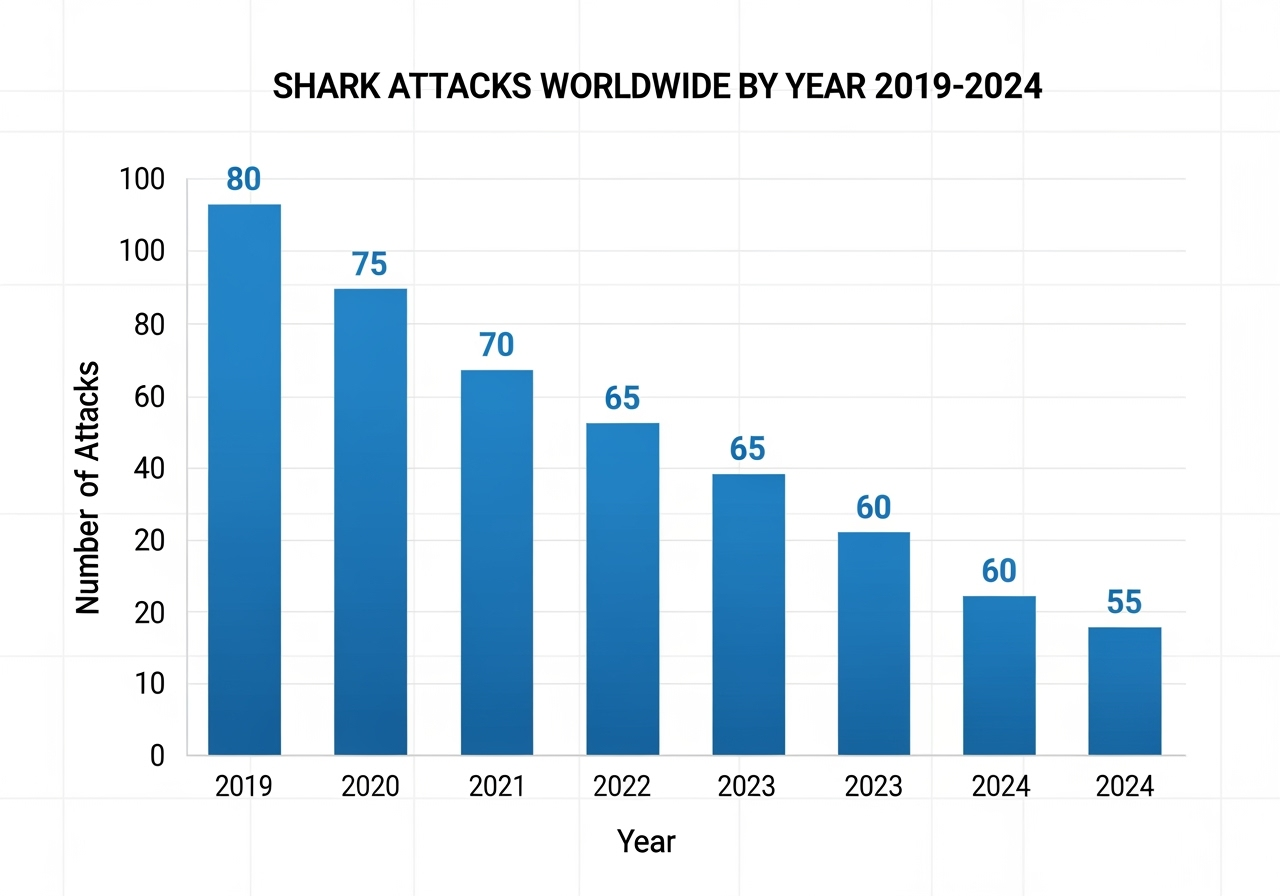
The Numbers Don’t Lie:
- Annual shark attacks worldwide: 70-100 confirmed cases
- Fatal attacks per year: 5-10 globally
- Your odds of being attacked: 1 in 11.5 million
- For comparison, you’re more likely to be:
- Struck by lightning: 1 in 1.2 million
- Injured by a toilet: 1 in 10,000
- Bitten by a dog: 1 in 73
Geographic Hotspots:
- Florida – 30% of all U.S. attacks
- Australia – 20% of global incidents
- South Africa – 15% of worldwide cases
- California – 10% of U.S. attacks
- Hawaii – 8% of U.S. incidents
Temporal Patterns:
- Peak attack months: July-September (summer beach season)
- Peak attack times: 2-6 PM (when people are most active in water)
- Most dangerous activities: Surfing (60%), swimming (25%), diving (10%)
SHARK SPECIES: MEET THE OCEAN’S DIVERSE HUNTERS
The Big Three (Most Dangerous to Humans):
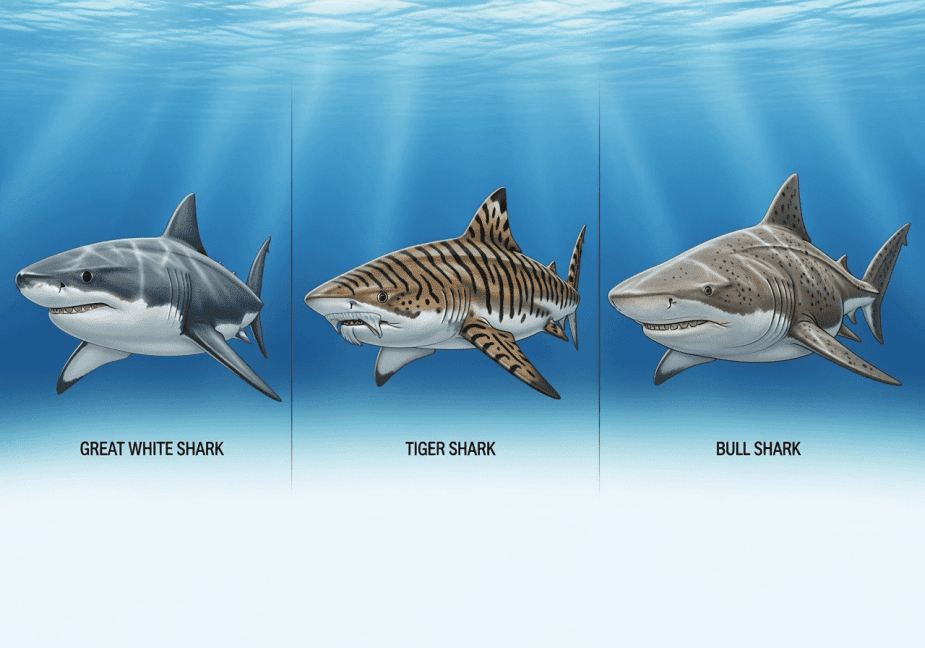
1. Great White Shark (Carcharodon carcharias)
- Size: Up to 20 feet, 5,000 pounds
- Bite force: 18,000 Newtons (4,000 PSI)
- Speed: 35 mph in short bursts
- Lifespan: 70+ years
- Fun fact: They can detect a drop of blood from 3 miles away
2. Tiger Shark (Galeocerdo cuvier)
- Size: Up to 18 feet, 2,000 pounds
- Nickname: “Wastebasket of the sea” (eats almost anything)
- Unique feature: Distinctive tiger stripes that fade with age
- Habitat: Tropical and subtropical waters worldwide
3. Bull Shark (Carcharhinus leucas)
- Size: Up to 11 feet, 500 pounds
- Special ability: Can survive in both saltwater and freshwater
- Aggression level: Highest testosterone levels of any animal
- Range: Found 2,500 miles up the Amazon River
The Gentle Giants:
Whale Shark (Rhincodon typus)
- Size: Up to 40 feet, 20 tons
- Diet: Plankton, small fish, fish eggs
- Feeding method: Filter feeding through gill rakers
- Conservation status: Endangered

Basking Shark (Cetorhinus maximus)
- Size: Up to 33 feet, 5 tons
- Diet: Zooplankton and small fish
- Behavior: Often seen “basking” at the surface
- Migration: Travels thousands of miles annually
SHARK ANATOMY: BUILT FOR PERFECTION
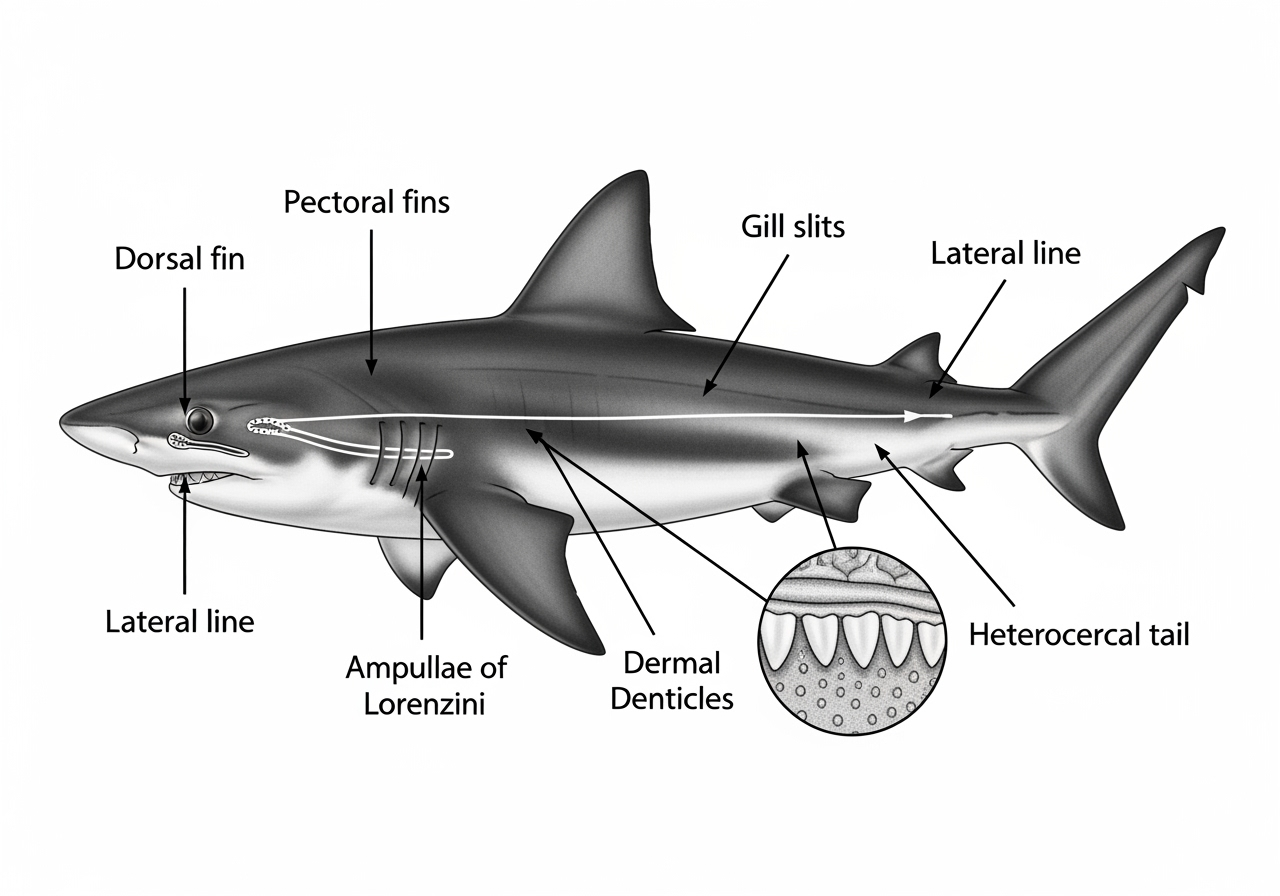
Sensory Superpowers:
1. Electroreception (Ampullae of Lorenzini)
- Sharks can detect electrical fields as weak as 5 billionths of a volt
- Every living creature produces electrical signals
- This “sixth sense” helps locate hidden prey
2. Lateral Line System
- Detects water movement and pressure changes
- Functions like underwater radar
- Can sense a fish moving from 100 feet away
3. Olfactory System
- Two-thirds of a shark’s brain is dedicated to smell
- Can detect one part per billion in water
- Nostrils are solely for smelling, not breathing
Physical Adaptations:
Cartilaginous Skeleton
- Made of cartilage, not bone
- 50% lighter than bone
- More flexible for swift movements
- Continuously growing throughout life
Dermal Denticles
- Tooth-like scales covering the skin
- Reduce drag by 10%
- Provide protection and silent swimming
- Inspired modern swimsuit designs
SHARK BEHAVIOR AND MIGRATION PATTERNS
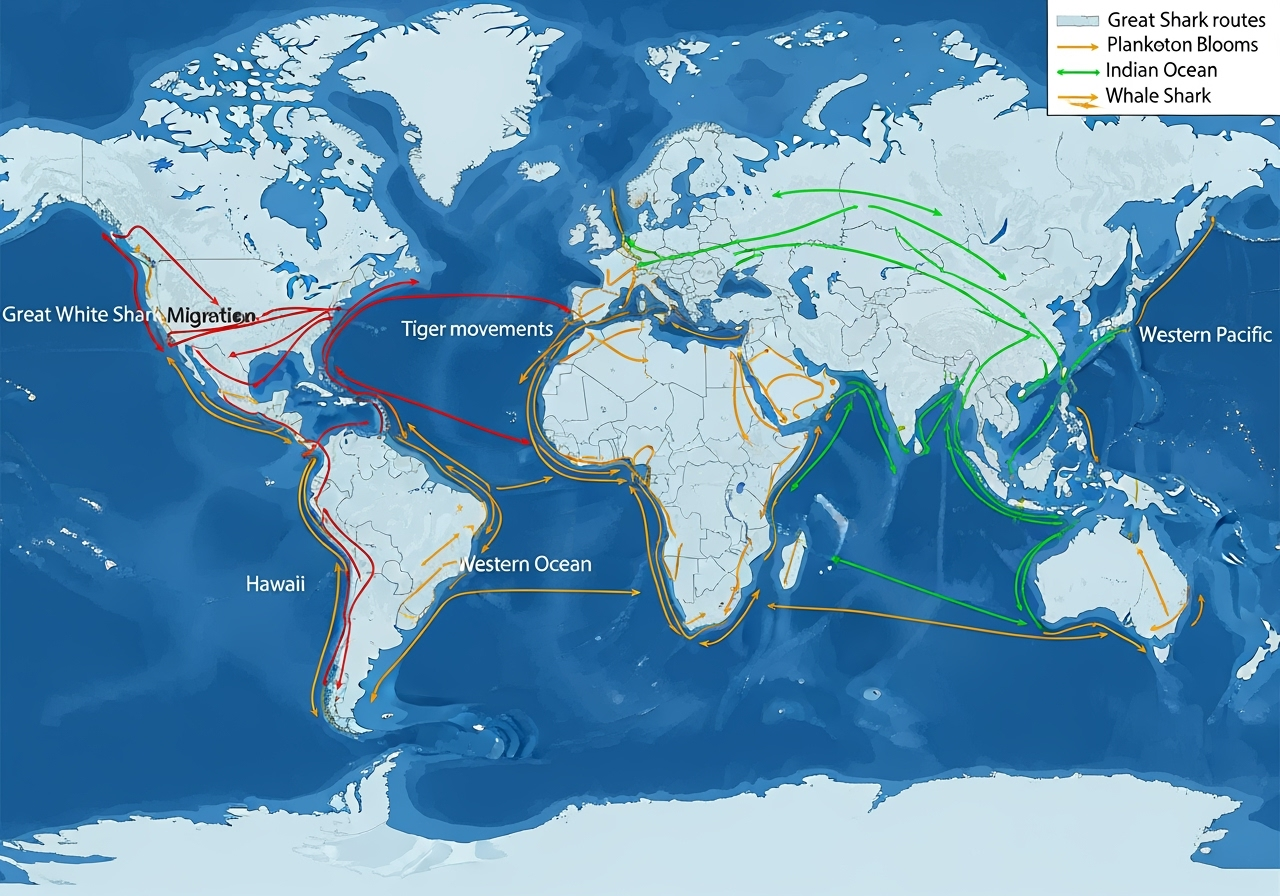
Migration Marvels:
- Great whites travel up to 12,000 miles annually
- Whale sharks follow plankton blooms across ocean basins
- Hammerheads form massive schools of 500+ individuals
- Blue sharks are the most widely distributed shark species
- Dominance hierarchies exist in many species
- Cooperative hunting is observed in some populations
- Site fidelity – returning to the same locations annually
- Aggregation sites where hundreds gather for mating or feeding
SHARK CONSERVATION: A SPECIES IN CRISIS
The Shocking Truth:
- 100 million sharks are killed by humans annually
- 90% decline in large shark populations since 1950
- 25% of shark species are threatened with extinction
- Sharks killed every second: 3 sharks
Primary Threats:
- Overfishing – 70% of the threat
- Bycatch – 20% of the threat
- Habitat destruction – 7% of the threat
- Climate change – 3% of the threat
Social Behaviors:
Conservation Success Stories:
- Great white shark populations are recovering in California
- Whale shark tourism generates $42 million annually in Mexico
- Shark sanctuaries now cover 6.6 million square miles globally.
- Finning bans implemented in 100+ countries
SHARKS: OCEAN’S HEROES, NOT VILLAINS
The Ecosystem Engineers
Sharks aren’t the mindless killers Hollywood portrays – they’re the ocean’s most crucial maintenance crew. Think of them as underwater gardeners who keep marine ecosystems healthy and thriving.
How Sharks Save Our Oceans:
1. Population Control Specialists
- Remove sick and weak animals, preventing disease spread
- Keep prey species populations at sustainable levels
- Prevent any one species from dominating the ecosystem
- Maintain genetic diversity by removing unfit individuals
2. Carbon Cycle Champions
- Large sharks store massive amounts of carbon in their bodies
- When they die naturally, this carbon sinks to the ocean floor
- Shark-driven nutrient cycling supports phytoplankton growth
- Phytoplankton produce 70% of Earth’s oxygen
3. Habitat Protectors
- Shark presence keeps herbivorous fish moving
- This prevents overgrazing of coral reefs and seagrass beds
- Healthy reefs protect coastlines from storms and erosion
- Seagrass beds are crucial nurseries for countless marine species
4. Economic Powerhouses
- Shark tourism generates $314 million annually worldwide
- Living sharks are worth $1.9 million each over their lifetime
- Dead sharks are worth only $50-200 for their fins
- Shark diving creates 10,000+ jobs globally
The Cascading Effect of Shark Loss:
When sharks disappear, entire ecosystems collapse in a domino effect called a “trophic cascade”:
- Australia’s Great Barrier Reef: Shark decline led to increased mid-level predators
- Result: Small fish populations crashed, algae bloomed, and coral died
- North Carolina: Shark overfishing caused a ray population explosion
- Result: Rays ate all the scallops, destroying a century-old fishery
Real-World Hero Stories:
The Bahamas Success Story:
- Banned shark fishing in 2011
- Shark tourism now generates $114 million annually
- Reef health improved dramatically
- Fish populations rebounded by 300%
Palau’s Shark Sanctuary:
- Created the world’s first shark sanctuary in 2009
- Shark tourism brings in $18 million yearly
- Employs 20% of the workforce
- Marine biodiversity increased by 40%
BITE FORCE: NATURE’S MOST POWERFUL JAWS
Jaw-Dropping Statistics:
- Great White: 18,000 Newtons (4,000 PSI)
- Tiger Shark: 13,000 Newtons (3,000 PSI)
- T-Rex (estimated): 12,800 Newtons (3,000 PSI)
- Bull Shark: 5,900 Newtons (1,350 PSI)
- Human: 700 Newtons (162 PSI)
How Shark Teeth Work:
- Sharks can have up to 50,000 teeth in their lifetime
- Teeth are replaced every 1-2 weeks
- Different tooth shapes for different prey
- Serrated edges work like microscopic saws
WHAT TO DO IF YOU ENCOUNTER A SHARK
Prevention is Key:
Before Entering the Water:
- Avoid dawn, dusk, and night swimming
- Stay away from fishing areas and seal colonies
- Don’t swim with open wounds
- Remove shiny jewelry (resembles fish scales)
- Swim in groups – sharks prefer solitary targets
If You See a Shark:
- Stay calm – sudden movements attract attention
- Maintain eye contact – shows you’re aware and not prey
- Back away slowly toward the shore or boat
- Keep the shark in sight at all times
- Create barriers using a camera, a surfboard, or diving equipment
If a Shark Approaches Aggressively:
- Fight back – sharks respect strength
- Target sensitive areas: gills, eyes, snout
- Use any available weapon: camera, stick, rock
- Stay vertical in water if possible
- Make yourself appear larger
During an Attack:
- Hit hard and repeatedly on the nose and gills
- Gouge the eyes if possible
- Don’t play dead – sharks will continue attacking
- Get out of the water immediately after the shark retreats
- Seek medical attention for any wound, no matter how small
WHY HEALTHY RESPECT TRUMPS VIOLENCE
The Intelligence Factor
Sharks aren’t primitive killing machines – they’re sophisticated predators with complex behaviors that deserve our respect, not our fear.
Shark Intelligence Revealed:
- Problem-solving abilities rival those of dolphins
- Social learning – younger sharks learn from elders
- Individual personalities – some are curious, others are shy
- Long-term memory – can remember feeding spots for years
- Tool use is observed in some species
The Misunderstood Predator
Why Sharks “Attack” Humans:
- Mistaken identity: Surfers resemble seals from below
- Investigatory bites: Sharks explore with their mouths
- Territorial defense: Protecting feeding or mating areas
- Stress response: Cornered or threatened sharks defend themselves
Most “attacks” are actually:
- Single bite and release (95% of cases)
- Shallow wounds indicate exploration, not predation
- Defensive behavior when humans enter their space
The Violence Cycle: Why Killing Sharks Backfires
Shark Culling Programs: The Failed Experiment
Western Australia (2014-2017):
- Killed 170+ sharks using drum lines
- Result: No reduction in shark encounters
- Cost: $22 million with zero safety improvement
- Ecological damage: Killed endangered species and dolphins
Queensland’s Shark Control Program:
- Running since 1962, killed 50,000+ sharks
- Bycatch: 84,000 non-target animals died
- Effectiveness: No proven reduction in shark encounters
- Modern assessment: Labeled “outdated and ineffective.”
Why Violence Doesn’t Work:
1. Ecological Disruption
- Removing sharks creates an ecosystem imbalance
- Prey species populations explode
- Food webs collapse
- Ocean health deteriorates
2. Species Confusion
- Most programs kill harmless species
- Dangerous species often avoid baited areas
- Juvenile sharks (no threat) make up 70% of kills
- Pregnant females are disproportionately caught
3. Behavioral Changes
- Surviving sharks become more aggressive
- Disrupted social structures increase unpredictable behavior
- Removal of dominant sharks allows inexperienced juveniles to enter areas
- Stress responses make encounters more dangerous
The Respect-Based Approach That Works
Successful Coexistence Models:
South Africa’s Shark Spotters Program:
- Method: Trained spotters watch for sharks from the mountains
- Technology: Flags warn beachgoers of shark presence
- Result: 70% reduction in shark encounters
- Cost: 90% less expensive than culling
- Bonus: Creates jobs and education opportunities
Australia’s Smart Drumlines:
- Innovation: SMART (Shark Management Alert in Real Time) drumlines
- Function: Alert authorities when sharks are caught
- Outcome: Sharks relocated alive, not killed
- Success rate: 99% of caught sharks released unharmed
California’s Great White Recovery:
- Protection: Banned great white hunting in 1994
- Education: Public awareness campaigns
- Technology: Shark tracking and warning apps
- Result: Shark populations are recovering, and encounters remain rare
Science News:
- The Ocean’s Hidden Highways: How Currents Shape Our World
- The Ocean’s Ultimate Apex Predator: 15 Mind-Blowing Facts About Orcas That Will Change How You See These Magnificent Mammals
Building Healthy Respect: A Better Way Forward
Education Over Elimination:
1. Understanding Shark Behavior
- Learn to read ocean conditions
- Recognize shark warning signs
- Understand seasonal patterns
- Respect marine protected areas
2. Coexistence Strategies
- Beach safety programs that work with shark behavior
- Early warning systems using technology
- Habitat protection that benefits all marine life
- Sustainable tourism that values living sharks
3. Cultural Shift
- From “shark-infested waters” to “shark habitat.”
- From “man-eater” to “apex predator.”
- From “pest control” to “conservation priority.”
- From fear-based to science-based decisions
The Respect Dividend:
When we choose respect over violence, everyone wins:
For Humans:
- Safer, more predictable shark behavior
- Thriving marine ecosystems
- Sustainable ocean resources
- Educational and tourism opportunities
For Sharks:
- Stable populations
- Natural behavior patterns
- Healthy breeding cycles
- Reduced stress and aggression
The Oceans:
- Balanced ecosystems
- Healthy coral reefs
- Abundant fish populations
- Climate regulation services
SHARK FEEDING HABITS AND DIET

Dietary Diversity:
Apex Predators (Great Whites, Tigers, Bulls):
- Marine mammals (seals, dolphins, whales)
- Large fish (tuna, rays, other sharks)
- Sea turtles and seabirds
- Feeding frequency: Every 2-3 days
Filter Feeders (Whale, Basking, Megamouth):
- Plankton and krill
- Small schooling fish
- Fish eggs and larvae
- Feeding method: Continuous throughout the day
Bottom Dwellers (Angel, Nurse, Carpet Sharks):
- Crustaceans and mollusks
- Bottom-dwelling fish
- Marine worms
- Feeding pattern: Nocturnal hunters
Specialized Feeders:
- Cookie-cutter sharks: Parasitic feeding on large marine animals
- Sawsharks: Use rostrum to slash through schools of fish
- Thresher sharks: Stun prey with their elongated tail
- Goblin sharks: Projectile jaws for deep-sea hunting
SHARK REPRODUCTION: THE CIRCLE OF LIFE

Reproduction Mysteries:
- Gestation periods: 6 months to 2 years
- Litter sizes: 1-100+ pups depending on species
- Reproductive maturity: 5-20 years old
- Mating behaviors: Complex courtship rituals
- Parental care: Most species provide no care after birth
Unique Reproductive Strategies:
- Oviparous: Egg-laying (Brownbanded Bamboo sharks)
- Viviparous: Live birth (Blue Sharks)
- Ovoviviparous: Eggs hatch inside the mother (Whale sharks)
- Parthenogenesis: Virgin birth (Zebra Shark; some species can reproduce without males)
Fascinating Reproduction Facts:
- Intrauterine cannibalism: Larger pups eat smaller siblings in the womb
- Delayed implantation: Embryos can pause development for months
- Sperm storage: Females can store sperm for up to a year
- Multiple paternity: One litter can have multiple fathers
FASCINATING SHARK FACTS THAT WILL BLOW YOUR MIND
Record Breakers:
- Fastest shark: Shortfin mako at 46 mph
- Largest shark ever: Megalodon at 60+ feet (extinct)
- Deepest dwelling: Portuguese dogfish at 12,000 feet
- Longest migration: Great white traveling 12,400 miles
- Most teeth: Whale shark with 3,000+ teeth
Weird and Wonderful:
- Goblin sharks can shoot their jaws out 3 inches
- Cookiecutter sharks take circular bites from whales
- Greenland sharks can live over 400 years
- Hammerheads use their heads to pin stingrays
- Sawsharks have chainsaw-like snouts
Evolutionary Marvels:
- Sharks predate dinosaurs by 200 million years
- They’ve survived 5 mass extinction events
- Some species glow in the dark (bioluminescence)
- Sharks don’t have swim bladders – they must keep moving
- Their skin inspired modern swimsuit and aircraft designs
Mind-Blowing Abilities:
- Magnetic navigation: Use Earth’s magnetic field like a GPS
- Pressure detection: Feel changes as small as a grain of sand
- Temperature regulation: Some species can warm their blood
- Healing powers: Wounds heal incredibly fast with minimal scarring
- Cancer resistance: Rarely develop tumors despite their size and age
PERSONAL ACTIONS THAT MAKE A DIFFERENCE
1. Choose Shark-Friendly Products
- Avoid shark fin soup and products
- Support sustainable seafood choices
- Choose reef-safe sunscreens
- Buy from companies with shark conservation policies
2. Support Conservation Efforts
- Donate to shark research organizations
- Participate in citizen science projects
- Choose eco-friendly shark tourism operators
- Advocate for marine protected areas
3. Spread Awareness
- Share accurate shark information
- Challenge shark myths when you hear them
- Support educational programs
- Use social media to promote shark conservation
4. Be a Responsible Ocean User
- Follow local beach safety guidelines
- Respect marine protected areas
- Practice sustainable fishing
- Reduce plastic use to protect marine habitats
CONCLUSION: RESPECTING THE OCEAN’S GUARDIANS
As Shark Week 2025 unfolds, remember that sharks are not the mindless killers portrayed in movies. They’re sophisticated predators that have maintained ocean balance for hundreds of millions of years. With only 5-10 fatal attacks globally each year, you’re statistically safer in shark-inhabited waters than in your bathroom.
These ocean heroes deserve our respect, not our violence. Every shark killed disrupts an ecosystem that took millions of years to perfect. Every shark protected helps maintain the delicate balance that keeps our oceans – and our planet – healthy.
The choice between fear and fascination, violence and respect, is ours to make. By choosing science over sensationalism, education over elimination, and coexistence over conflict, we can ensure these magnificent creatures continue their vital work for generations to come.
The Bottom Line: Sharks have been protecting our oceans for 400 million years. Now it’s our turn to protect them.
Bad Dawg Sports – Real reporting. Real access. No fluff.
Bad Dawg Sports Newsletter — $2/year. Learn the facts, kill the myths: sharks keep the ocean in balance—and education is how we protect them.
About Bad Dawg Sports: Your source for global sports news with unique insights from former athletes, insiders, and passionate fans. Founded by former multi-sport athlete and Marine Biologist J.J. Pavlick, we bring both athletic expertise and scientific knowledge to our coverage. Follow us @jj_pavlick for more in-depth coverage that goes beyond the headlines.
Discover more from Bad Dawg Media Group
Subscribe to get the latest posts sent to your email.