
Cincinnati, Ohio – Cincinnati Bengals owner Mike Brown delivered his most direct public comments in months regarding the ongoing contract dispute with first-round draft pick Shemar Stewart, making it clear the organization will not compromise on key contract language that could void guarantees under specific circumstances.
The Contract Standoff Explained
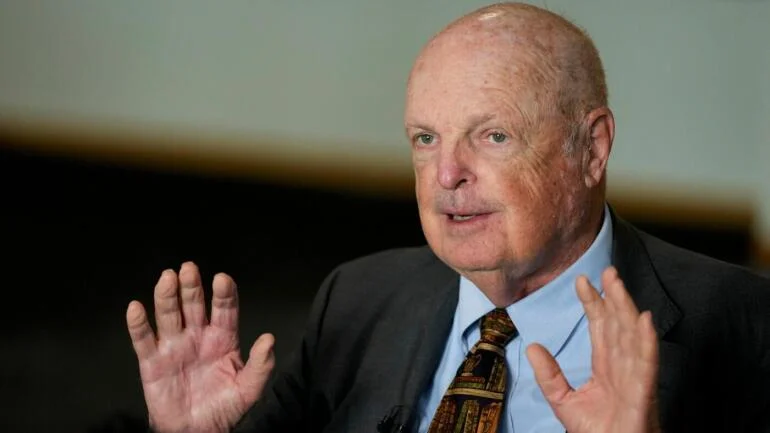
Speaking during the team’s annual local media day on Monday, the 89-year-old Brown addressed the bitter contract dispute that has kept Stewart away from training camp. While both parties agree on the financial terms – a four-year, $18,969,276 deal with standard rookie slot money – the disagreement centers entirely on contract language regarding guaranteed money.
The core issue:
- Stewart’s position: Wants fully guaranteed money to remain guaranteed regardless of circumstances
- Bengals’ position: Seeks ability to void guarantees if Stewart violates NFL policies requiring suspension or breaks the law
Brown’s Blunt Assessment
In rare public comments, Brown explained the team’s unwavering stance with characteristic directness:
“His agent wants it to be so that if he acted in a terrible fashion — this is all hypothetical — something that rises to the level of going to prison, that we would be on the line for the guarantees for the future years that haven’t been paid,” Brown stated. “And our position is no, if that happens, we’re not going to be. We’re not going to be paying someone who’s sitting in jail. That’s not what we’re going to do.”
What This Means for Both Sides
Brown’s public comments represent a significant escalation in the contract standoff, effectively drawing a line in the sand that suggests the Bengals won’t budge on their proposed language. This puts pressure squarely on Stewart and his agent, Zac Hiller, to accept the team’s terms or risk an extended holdout.
Key implications:
- Financial impact: Stewart loses approximately $104,000 per day during holdout
- Team preparation: Bengals must prepare for season without their top draft pick
- Precedent setting: Outcome could influence future rookie contract negotiations
- Training camp impact: Stewart misses crucial development time and team integration
Historical Context and Rarity
Brown’s direct public stance is notable given his typically private approach to contract negotiations. The 89-year-old owner, who will turn 90 in three weeks, rarely speaks to media but maintains firm control over organizational decisions. His willingness to make such pointed public comments suggests the Bengals view this as a non-negotiable issue.
The Numbers Behind the Dispute
Stewart’s rookie contract breakdown:
- Total value: $18,969,276 over four years
- Guaranteed money: Substantial portion guaranteed at signing
- Daily holdout cost: Approximately $104,000 per missed day
- Draft position: First-round selection requiring immediate impact
Industry Perspective
While rookie contracts are now slotted based on draft position, language regarding guarantee voidability has become increasingly important to NFL teams. Organizations seek protection against off-field incidents that could result in suspensions or legal troubles, while players and agents push for maximum security in guaranteed money.
The Bengals’ stance reflects a broader NFL trend of teams seeking more protection in player contracts, particularly following high-profile cases where guaranteed money became problematic due to player conduct issues.
What Happens Next
With Brown’s public comments effectively closing the door on compromise from Cincinnati’s side, the resolution likely depends on Stewart’s camp accepting the team’s proposed language. The longer the standoff continues, the more training camp and preseason preparation time Stewart loses.
Potential outcomes:
- Stewart accepts Bengals’ contract language to end holdout
- Extended standoff lasting into regular season
- Rare scenario where player sits out entire season
- Last-minute compromise on alternative protective language
Impact on Bengals’ Season
Stewart’s absence creates immediate challenges for Cincinnati’s defensive planning. As a first-round pick, he was expected to contribute immediately to a defense looking to improve from last season’s performance. Each missed day of training camp reduces his ability to integrate into the team’s systems and develop chemistry with teammates.
The public nature of Brown’s comments also sends a message to current players and future draft picks about the organization’s approach to contract negotiations and behavioral expectations.
With training camp in full swing and the regular season approaching, both sides face mounting pressure to resolve a dispute that has moved beyond financial terms to fundamental questions about guaranteed money protection in modern NFL contracts.
Discover more from Bad Dawg Media Group
Subscribe to get the latest posts sent to your email.