


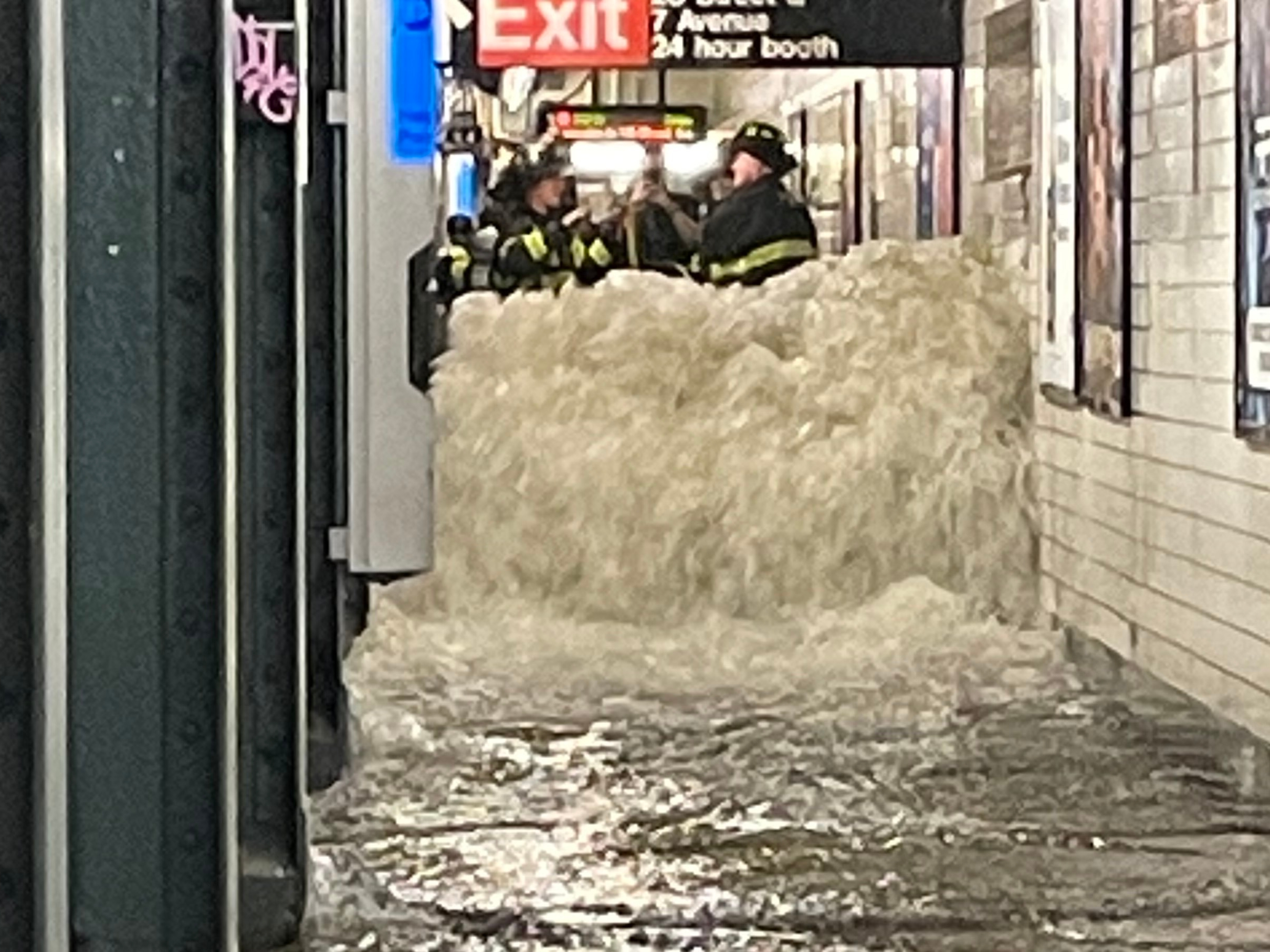
New York, NY – The Metropolitan Transportation Authority’s century-old subway system was severely disrupted on Monday night as torrential rainfall overwhelmed drainage systems and flooded stations across the five boroughs, forcing the temporary closure of 20 stations and causing widespread service delays, despite billions of dollars invested in flood prevention measures.
Record-Breaking Rainfall Exposes Infrastructure Limitations
Monday’s storm delivered 2.64 inches of rain to Central Park, shattering the previous July 14 record of 1.47 inches set in 1908. The deluge highlighted the ongoing vulnerability of New York’s underground transit network, which serves millions of passengers daily across 472 subway stations.
Key Impact Statistics:
- 20 stations temporarily closed
- 16 additional stations experienced delays or partial closures
- 15+ million gallons of water pumped from tunnels (compared to the typical 10-13 million gallons daily)
- 39,000 open grates provide potential water entry points throughout the system
Technical Challenges Behind Subway Flooding
The flooding stems from multiple infrastructure factors that compound during extreme weather events:
Drainage System Overload
New York’s combined sewer system, designed over 100 years ago, handles both storm water runoff and sewage through single pipes. The system’s capacity maxes out at approximately 1.75 inches of rain per hour – significantly less than Monday’s rainfall intensity.
Multiple Water Entry Points
Every subway station opening creates potential flood entry, including:
- Staircase entrances
- Elevator shafts
- 39,000 ventilation grates (many requiring manual closure)
- Street-level infrastructure connections
Topographical Vulnerabilities
Certain subway lines face heightened flood risk due to their location in natural low points, particularly along Broadway corridors in the Bronx and Manhattan near the 1, 2, and 3 train lines.

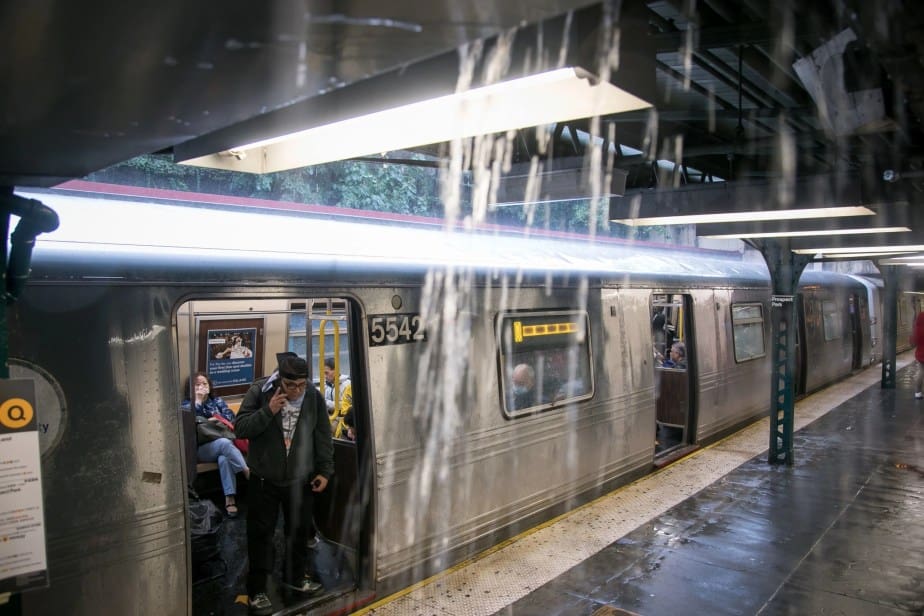
7/14/25 NYC Subways flooded after a massive rainstorm hit the area. Mandatory Credit: Getty Images 7/14/25 NYC Subways flooded after a massive rainstorm hit the area. Mandatory Credit: Getty Images 7/14/25 NYC Subways flooded after a massive rainstorm hit the area. Mandatory Credit: Getty Images NEW YORK, NY – SEPTEMBER 02: Commuters walk into a flooded 3rd Avenue / 149th st subway station and disrupted service due to extremely heavy rainfall from the remnants of Hurricane Ida on September 2, 2021, in New York City. Multiple fatalities have been reported in the region as the storm passed through New York City, dumping 3.15 inches of rain in the span of an hour in Central Park and causing massive flooding in Brooklyn. (Photo by David Dee Delgado/Getty Images) 7/14/25 NYC Subways flooded after a massive rainstorm hit the area. Mandatory Credit: Getty Images




Current Flood Prevention Investments
Since Superstorm Sandy in 2012, the MTA has invested $7.6 billion in resiliency improvements, including:
Completed Projects:
- Sealing 8,200 infrastructure leaks
- Fortifying subway entrances
- Raising critical infrastructure above flood levels
- Installing improved pumping systems
Ongoing Initiatives (2024-2029):
- $700 million allocated for additional resiliency features
- Upgrades to pump rooms at flood-prone stations
- Raising stairs and vents near vulnerable entrances
- Developing automatic closure systems for ventilation grates
Multi-Agency Coordination Requirements
Transit officials emphasize that comprehensive flood prevention requires coordination between multiple city agencies:
MTA Responsibilities
- Subway infrastructure hardening
- Pump system improvements
- Station entrance modifications
- Ventilation system automation
Department of Environmental Protection Projects
- $30 billion in crucial sewer upgrades over the coming decades
- $390 million Brooklyn sewer improvement project
- Maintenance of 150,000 storm drains citywide
- Green infrastructure development
Economic and Operational Impact
The flooding’s economic implications extend beyond immediate service disruptions:
Daily Operations:
- Normal water pumping: 10-13 million gallons daily
- Monday’s emergency pumping: 15+ million gallons
- 254 pumping stations operate continuously across the system
Future Investment Needs:
- An additional $6 billion is projected for weather resiliency over 10 years
- Annual sewer project budget: $1 billion
- Governor Hochul’s approved $68 billion five-year MTA capital plan includes hundreds of millions for extreme weather protection
Passenger Impact and Adaptation
Long-time subway users have developed strategies for severe weather events. Larry Oquendo, 67, canceled Monday evening travel plans after previous experiences with flooded stations. “I knew it was going to be bad,” Oquendo stated. “So I ain’t traveling.”
The unpredictable nature of flash flooding means some stations experience severe inundation while nearby stops remain relatively unaffected, complicating both passenger planning and emergency response.
Engineering Solutions and Timeline
Klaus Jacob, a Columbia University geophysicist who has consulted on subway flooding issues, notes that while the MTA has addressed coastal flooding from storm surge, rainwater pooling at topographical low points remains problematic.
Technical Challenges:
- The system operates below the water table in many areas
- Combined sewer overflow during heavy rainfall
- The infrastructure age exceeds design specifications
- Climate pattern changes affecting storm intensity
Political Response and Future Planning
Monday’s flooding has drawn responses from mayoral candidates across party lines:
Policy Positions:
- Democratic nominee Zohran Mamdani called for infrastructure upgrades to address “new climate reality”
- Former Governor Andrew Cuomo emphasized expediting MTA resiliency projects
- Republican candidate Curtis Sliwa criticized development policies affecting drainage
- Mayor Eric Adams highlighted broader flash flood risks beyond the subway system
Long-Term Infrastructure Strategy
Transit experts project that comprehensive flood prevention will require decades of sustained investment and inter-agency cooperation. The Regional Plan Association estimates that extreme storms could affect nearly 20 percent of all subway entrances during severe weather events.
Strategic Priorities:
- Accelerating automatic ventilation closure systems
- Expanding pump room capacity at vulnerable stations
- Coordinating sewer system upgrades with subway improvements
- Developing real-time flood monitoring and response protocols
MTA Chairman Janno Lieber emphasized the system’s fundamental challenge: “The system is not a hermetically sealed submarine.” This reality necessitates ongoing adaptation rather than the complete elimination of flooding.
The Monday night flooding serves as a reminder that, despite significant investments in infrastructure improvements, New York’s subway system remains vulnerable to extreme weather events, necessitating ongoing investment and multi-agency coordination to protect the transit network that millions of residents rely on daily.
Discover more from Bad Dawg Media Group
Subscribe to get the latest posts sent to your email.


