

The Miracle of Quito: Ecuador’s Unforgettable Comeback
In what will undoubtedly be remembered as one of the most dramatic opening matches in Copa América Femenina history, the host nation, Ecuador, delivered a heart-stopping comeback that sent the packed Estadio Banco Guayaquil into absolute delirium. Trailing 2-0 with just 20 minutes remaining, Las Tricolor staged an incredible revival to earn a 2-2 draw against Uruguay that will echo through South American women’s football folklore.
The scenes at the final whistle were nothing short of extraordinary. Ecuador players collapsed to their knees in tears of joy, while their Uruguayan counterparts stood in stunned disbelief, unable to comprehend how a commanding lead had slipped through their fingers in the most dramatic fashion imaginable.
First Half: Uruguay’s Clinical Start
Uruguay arrived in Quito with confidence, and their early tactical approach proved devastatingly effective. Operating in a compact 4-5-1 formation, Las Charrúas pressed high and disrupted Ecuador’s rhythm from the opening whistle.
The breakthrough came in the 11th minute through Belén Aquino, whose perfectly timed run behind Ecuador’s defensive line caught the hosts off guard. The goal was a masterpiece of tactical execution—a quick transition from defense to attack that exposed Ecuador’s high defensive line.
“We knew Ecuador would come out strong in front of their home crowd,” said Pamela González, Uruguay’s captain, post-match. “Our plan was to weather the early storm and hit them on the counter. Belén’s goal was exactly what we practiced.”
Ecuador’s response was immediate but lacking in precision. Playing in their preferred 4-3-3 formation, the hosts dominated possession but struggled to create clear-cut chances against Uruguay’s disciplined defensive block.


Second Half: Uruguay Extends Lead
The second half began with Ecuador pushing forward desperately, but Uruguay’s tactical discipline remained intact. In the 53rd minute, disaster struck for the hosts when a clumsy challenge in the penalty area handed Uruguay a golden opportunity.
Pamela González stepped up and coolly converted from the spot, sending the Ecuador goalkeeper the wrong way and seemingly putting the match beyond the hosts’ reach at 2-0.
“When we scored the penalty, we thought the game was over,” admitted Ariel Longo, Uruguay’s coach. “Ecuador looked deflated, and we were controlling everything. What happened next was something nobody could have predicted.”
The Miracle Begins: Ecuador’s Tactical Transformation
With their Copa América dreams hanging by a thread, Ecuador’s coach made the tactical changes that would alter the course of football history. Switching to an aggressive 3-4-3 formation, the hosts threw caution to the wind and committed everything to attack.
The transformation was immediate and dramatic. Ecuador’s wing-backs pushed higher, creating overloads in wide areas, while their central midfielders began making more adventurous runs into the penalty area.
The 72nd Minute: Hope Ignites
The comeback began in the most unlikely fashion. A hopeful cross from Ecuador’s right flank found its way to the far post, where Uruguay’s Yannel Correa, under pressure from Ecuador attackers, inadvertently turned the ball into her own net.
The stadium erupted. What had been a subdued atmosphere suddenly transformed into a cauldron of noise and emotion. Ecuador players celebrated as if they had won the tournament, while Uruguay’s players looked shell-shocked.
“The own goal changed everything,” said Ligia Moreira, Ecuador’s captain, tears still visible in her eyes. “Suddenly, we believed again. The crowd believed. You could feel the energy shift completely.”
The 78th Minute: Pandemonium in Quito
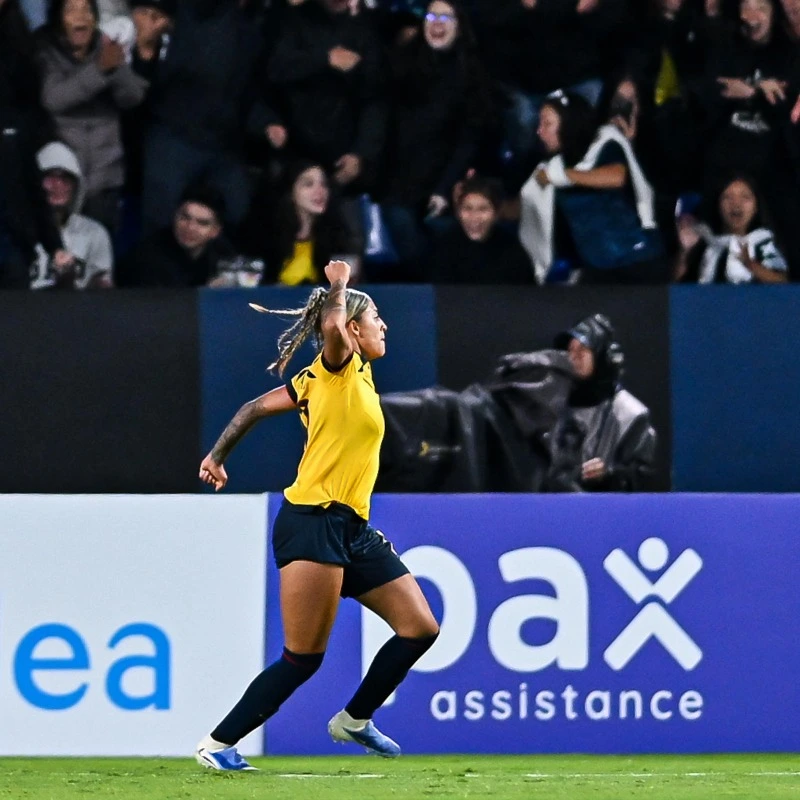
Six minutes later, Ecuador completed one of the most remarkable comebacks in Copa América history. Emily Arias, who had been introduced as a substitute just minutes earlier, found herself in the right place at the right time when a scramble in the Uruguay penalty area fell kindly to her.
Her finish was composed and clinical – a stark contrast to the chaos surrounding the goal. As the ball hit the back of the net, the Estadio Banco Guayaquil exploded in scenes of pure joy that will be replayed for generations.
“I can’t describe the feeling,” said Arias, still breathless from the celebration. “When the ball came to me, time seemed to slow down. I just knew I had to score for my country, for these incredible fans. This is what dreams are made of.”
Tactical Analysis: How Ecuador Pulled Off the Impossible
Uruguay’s Tactical Collapse
Uruguay’s downfall came from their inability to adapt to Ecuador’s tactical switch. Having controlled the game through disciplined defensive play and quick transitions, Las Charrúas failed to recognize the threat posed by Ecuador’s formation change.
“We stopped playing our game,” admitted Ximena Velazco, Uruguay’s defensive midfielder. “Instead of staying compact and hitting them on the counter, we started sitting deeper and deeper. We invited the pressure, and eventually, it broke us.”
The psychological impact of the own goal cannot be understated. Uruguay’s players visibly dropped their heads, and their previously impeccable defensive shape began to crumble under the relentless pressure from Ecuador’s attacking players.
Ecuador’s Masterstroke
Ecuador’s tactical transformation was nothing short of brilliant. By switching to a three-center-back formation, they freed up their wing-backs to provide width and create numerical superiority in attacking areas.
“The coach told us to be brave,” revealed Jessy Caicedo, Ecuador’s wing-back. “He said we had nothing to lose and everything to gain. The formation change gave us more bodies in attack, and the crowd gave us the energy to keep pushing.”
The introduction of fresh legs in the final 20 minutes proved crucial. Ecuador’s substitutes brought pace and directness that Uruguay’s tired defenders couldn’t handle.
The Emotional Aftermath
The scenes at the final whistle told the complete story of this remarkable encounter. Ecuador players embraced tearfully, their joy infectious as it spread throughout the stadium. Fans wept openly in the stands, many unable to believe what they had witnessed.
“This is why we love football,” said Eduardo Moscoso Ecuador’s head coach, his voice cracking with emotion. “Twenty minutes ago, we were facing elimination. Now we have a point that feels like a victory. The character these players showed is incredible.”
For Uruguay, the disappointment was palpable. Players sat on the pitch in stunned silence, struggling to process how a commanding lead had evaporated so dramatically.
“Football can be cruel,” said Ariel Longo, Uruguay’s coach. “We played well for 70 minutes, but this is a lesson that in football, nothing is over until the final whistle. We have to learn from this and come back stronger.”
Looking Ahead: Tournament Implications
This dramatic draw has significant implications for both teams’ Copa América campaigns. Ecuador’s point at home could prove crucial in their quest to reach the knockout stages, while Uruguay will need to regroup quickly to avoid further setbacks.
“This result gives us confidence,” said Ligia Moreira, Ecuador’s captain. “If we can come back from 2-0 down against a strong Uruguay team, we can compete with anyone in this tournament.”
The match also highlighted the growing competitiveness of women’s football in South America. Gone are the days when results could be predicted with certainty – this tournament promises to be full of surprises.
A Night to Remember
As the fans slowly filed out of the Estadio Banco Guayaquil, many lingered to savor the moment. They had witnessed something special- a comeback that transcended sport and became a moment of national pride.
“My daughter will hear about this match for the rest of her life,” said one emotional fan. “This is what it means to never give up, to believe even when everything seems lost.”
For Ecuador, this was more than just a football match – it was a statement of intent, a declaration that they belong on the biggest stage. For Uruguay, it was a harsh reminder that in football, as in life, nothing is guaranteed.
The Copa América Femenina 2025 couldn’t have asked for a more dramatic opening. If this match is any indication, we’re in for a tournament that will be remembered for years to come.
Discover more from Bad Dawg Sports - Global Sports Coverage & Analysis
Subscribe to get the latest posts sent to your email.