

The Giant Falls Silent: Remembering Peter Rufai, Nigeria’s Legendary ‘Dodo Mayana’
A nation mourns as one of its greatest football heroes takes his final bow
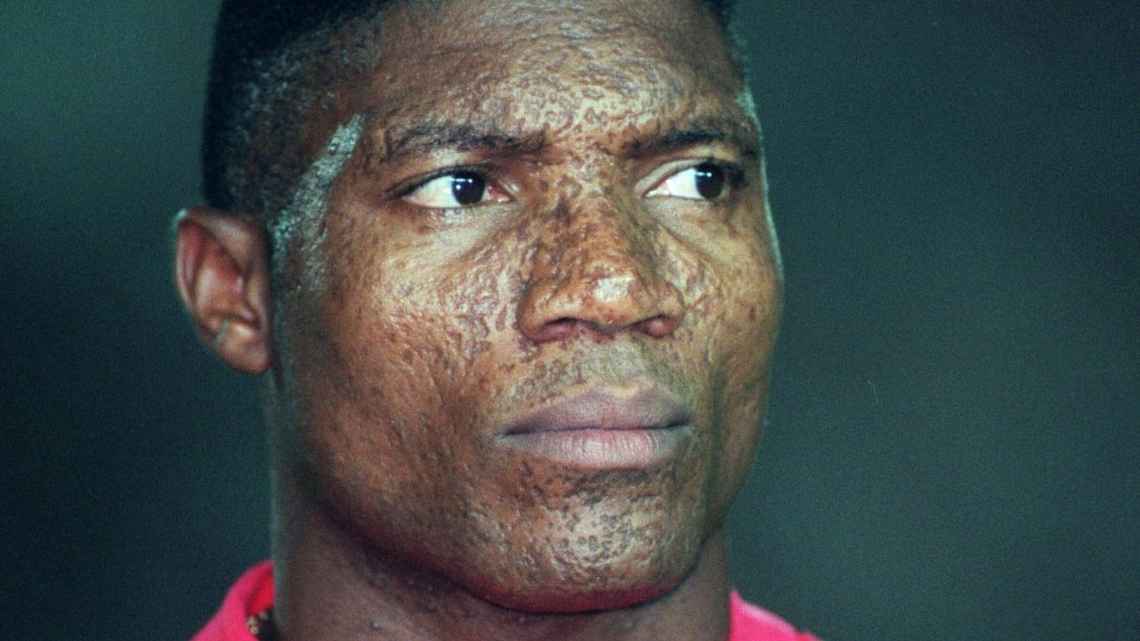
The morning sun rose over Lagos on Thursday, but for Nigerian football, the light seemed dimmer. At 6 a.m. West Africa Standard Time, Peter Rufai—affectionately known as “Dodo Mayana”—breathed his last at a Lagos hospital, ending a courageous battle with illness that had lasted several weeks. He was 61 years old. In those final moments, as Nigeria’s legendary goalkeeper slipped away, the echoes of a thousand roars from stadiums across Africa and beyond seemed to whisper his name one last time. For Peter Rufai wasn’t just a goalkeeper; he was a guardian of dreams, a keeper of hope, and a symbol of Nigerian excellence on the world stage.
The Heart of a Champion
Born on August 24, 1963, Peter Rufai embodied everything that made Nigerian football beautiful—flair, courage, and an unshakable belief in the impossible. His journey from the dusty pitches of Lagos to the grand stages of World Cups reads like a fairy tale, but it was written with sweat, sacrifice, and an unwavering love for his country.
“This is a huge loss for Nigerian football,” said Nigeria Football Federation president Ibrahim Gusau, his voice heavy with emotion. “I saw him about a week ago, and he was looking lean. When I asked him if all was well, he said he was okay.” Those words—” he said he was okay”—capture the essence of Rufai’s character.
Even in his final days, he carried himself with the quiet dignity that defined his 17-year international career.
The Moment That Defined a Nation
February 10, 1994. Tunis, Tunisia. The Africa Cup of Nations final. As Peter Rufai stood between the goalposts, the weight of 100 million Nigerian dreams rested on his shoulders. This wasn’t just another match—this was destiny calling.
The Super Eagles had come so close before. Runners-up in 1984. Runners-up again in 1988. The heartbreak of those near-misses could have broken lesser men, but not Rufai. With hands that seemed blessed by the gods and reflexes that defied human limitation, he helped guide Nigeria to their first-ever AFCON triumph.
When the final whistle blew and confetti rained down on the Stade El Menzah, Peter Rufai didn’t just celebrate a victory—he celebrated the birth of a golden generation. That moment in Tunisia would forever be etched in the hearts of Nigerians everywhere, a testament to what was possible when talent met determination.
The Penalty King
But it was in the crucible of penalty shootouts that Rufai’s legend truly crystallized. In 1988, facing Algeria’s Lakhder Belloumi in the semifinals, Rufai dove to his left and palmed away what could have been Nigeria’s exit from the tournament. The save wasn’t just athletic brilliance—it was poetry in motion, a moment of pure artistry that sent an entire nation into raptures.
Six years later, history repeated itself. Facing Ivory Coast in the 1994 AFCON semifinals, with the weight of expectation crushing down on every Nigerian heart, Rufai once again rose to the occasion. His save from Armani Yao paved the way for Rashidi Yekini’s winning penalty, sending Nigeria to another final—this time, the one they would win.
These weren’t just saves; they were acts of national service, moments when one man’s courage lifted the spirits of millions.
Captain Nigeria in America
The 1994 FIFA World Cup in the United States marked Nigeria’s debut on football’s grandest stage, and who better to lead them than their guardian angel? Captain Peter Rufai wore the armband with pride as the Super Eagles announced themselves to the world with a style and swagger that captivated global audiences.
Reaching the Round of 16 in their first World Cup wasn’t just an achievement—it was a statement. Nigeria belonged among the world’s elite, and Rufai was the steady hand that guided them there. Four years later, at France ’98, he proved it wasn’t a fluke, once again leading his nation to the knockout stages.
Beyond the Gloves
What made Peter Rufai special wasn’t just his shot-stopping ability, though his agility and flamboyant style made him a joy to watch. It was his character, his leadership, and his unwavering commitment to excellence that set him apart.
From his teenage days at Stationery Stores, where he helped the Lagos-based club reach the 1981 African Cup Winners’ Cup final, to his European adventures with clubs in Belgium, Netherlands, Portugal, and Spain, Rufai carried himself with a professionalism that earned respect wherever he went.
His 65 international caps tell only part of the story. Each appearance was a masterclass in goalkeeping, a demonstration of what it meant to represent Nigeria with pride and passion.
The Final Whistle
The confirmation of Rufai’s passing came from his close friend and former international teammate Waidi Akanni, whose words carried the weight of a nation’s grief: “Yes, our friend ‘Dodo Mayana’ died this morning and he has been moved to the mortuary as we speak.”
NFF general secretary Dr Mohammed Sanusi expressed the shock felt across Nigerian football: “I am perplexed. We did not even know that he had been ill. We earnestly pray to the Almighty God to comfort all his loved ones as well as the entire Nigerian football family.”
A Legacy That Lives On
In his post-playing career, Rufai continued to give back to the game he loved, running goalkeeping academies in Nigeria and Spain. Even in retirement, he remained a teacher, a mentor, and an inspiration to young keepers dreaming of following in his footsteps.
Tragically, Peter Rufai becomes the sixth member of Nigeria’s iconic USA ’94 squad to pass away, joining Uche Okafor, Thompson Oliha, Rashidi Yekini, Stephen Keshi, and Wilfred Agbonavbare in football’s eternal hall of fame. Each loss diminishes us, but their collective legacy continues to inspire new generations of Nigerian footballers.
The Giant’s Final Save
As we bid farewell to Peter Rufai, we remember not just a goalkeeper, but a giant of African football. His hands may no longer guard the goal, but his spirit will forever protect the dreams of young Nigerians who dare to believe in the impossible.
In stadiums across Nigeria tonight, fans will raise their voices in tribute to “Dodo Mayana.” They’ll remember the saves, the victories, the moments of pure magic that only he could provide. And in that remembrance, Peter Rufai will live forever—not just as a goalkeeper, but as a symbol of what it means to represent your country with honor, courage, and unshakable pride.
Rest in peace, Peter Rufai. Your watch is ended, but your legend will never die.
The giant of football has fallen, but giants never truly leave us. They live on in the hearts they touched and the dreams they helped fulfill.
Discover more from Bad Dawg Media Group
Subscribe to get the latest posts sent to your email.


