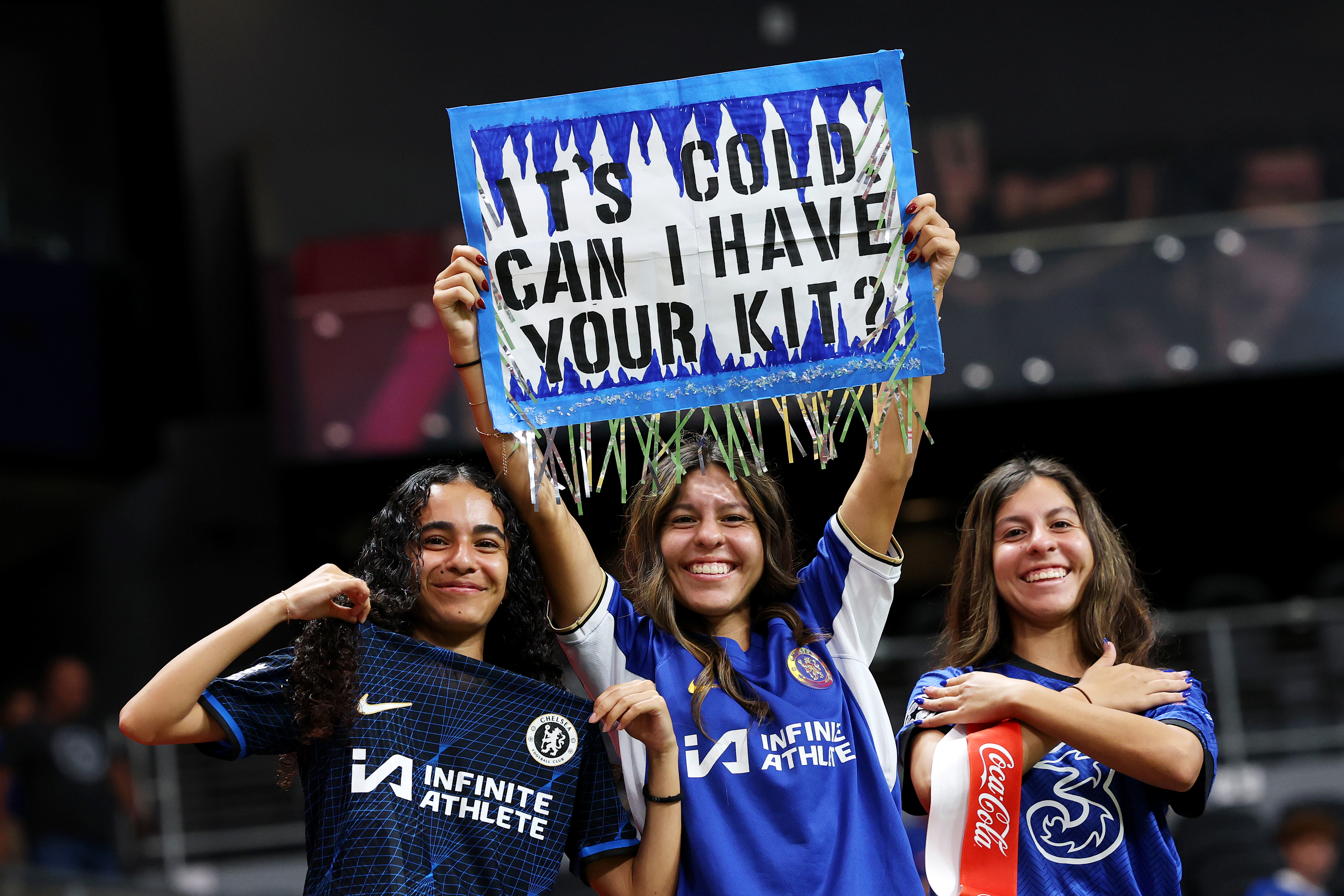
The Mercedes-Benz Stadium in Atlanta witnessed a tale of two contrasts on Monday afternoon: Chelsea’s polished 2-0 victory over LAFC showcased European tactical superiority, while the disappointing attendance of just 22,137 in a 71,000-capacity venue highlighted the challenges facing the Club World Cup’s expansion in the United States.
Match Overview: European Class Meets MLS Ambition
Chelsea’s comprehensive victory was built on tactical discipline, individual brilliance, and the kind of clinical finishing that separates elite European football from its American counterpart. The Blues controlled proceedings from start to finish, dominating possession (65.2% to 34.8%) and creating superior chances (17 shots to 7) in a performance that suggested they’re serious contenders for Club World Cup glory.
Key Match Statistics:
- Possession: Chelsea 65.2% – LAFC 34.8%
- Shots on Target: Chelsea 6 – LAFC 4
- Total Shots: Chelsea 17 – LAFC 7
- Corner Kicks: Chelsea 7 – LAFC 1
- Saves: Chelsea 4 – LAFC 3
- Yellow Cards: Chelsea 3 – LAFC 2
Liam Delap’s Dream Debut: From Ipswich to the World Stage
The Perfect Introduction
Liam Delap’s Chelsea debut couldn’t have been scripted better. The 21-year-old Englishman, who joined from Ipswich Town earlier in June, marked his first appearance in Blue with a perfectly weighted assist for Enzo Fernández’s insurance goal in the 79th minute.
Delap’s Debut Statistics:
- Minutes Played: 67 (introduced in 23rd minute)
- Assists: 1
- Key Passes: 2
- Touches: 34
- Pass Accuracy: 88%
- Aerial Duels Won: 3/4
The young striker’s cross for Fernández’s goal demonstrated the kind of vision and technical ability that convinced Chelsea to invest in his potential. His movement throughout the match suggested a player comfortable at the highest level, despite the significant step up from Championship football.
Tactical Integration
Enzo Maresca’s decision to introduce Delap early in the match proved inspired. The striker’s physical presence and link-up play provided Chelsea with a different dimension, allowing Nicolas Jackson to drift wider and create space for the attacking midfielders to exploit.
Goal Analysis: Clinical Finishing Meets Creative Brilliance
Goal 1: Pedro Neto (34′) – Individual Brilliance
Neto’s opening goal was a masterclass in individual skill and composure. The sequence began with Nicolas Jackson’s intelligent movement to create space, followed by a perfectly weighted pass that found Neto in stride.
Goal Breakdown:
- Jackson’s Movement: Drew LAFC’s defensive line
- The Pass: Precise through-ball splitting the defense
- Neto’s Skill: Devastating fake that sent Ryan Hollingshead to the ground
- The Finish: Composed strike past Hugo Lloris
The goal highlighted the gulf in technical ability between Premier League and MLS players, with Neto’s close control and finishing ability proving decisive.

ATLANTA, GEORGIA – JUNE 16: Enzo Fernandez #8 of Chelsea FC scores his team’s second goal past Hugo Lloris #1 of LAFC during the FIFA Club World Cup 2025 group D match between Chelsea FC and Los Angeles Football Club at Mercedes-Benz Stadium on June 16, 2025 in Atlanta, Georgia. (Photo by Stuart Franklin – FIFA/FIFA via Getty Images) ATLANTA, GEORGIA – JUNE 16: Pedro Neto #7 of Chelsea FC scores his side’s first goal past Hugo Lloris #1 of LAFC during the FIFA Club World Cup 2025 group D match between Chelsea FC and Los Angeles Football Club at Mercedes-Benz Stadium on June 16, 2025 in Atlanta, Georgia. (Photo by Stuart Franklin – FIFA/FIFA via Getty Images) ATLANTA, GEORGIA – JUNE 16: Pedro Neto #7 of Chelsea FC scores his team’s first goal during the FIFA Club World Cup 2025 group D match between Chelsea FC and Los Angeles Football Club at Mercedes-Benz Stadium on June 16, 2025 in Atlanta, Georgia. (Photo by Stuart Franklin – FIFA/FIFA via Getty Images)



Goal 2: Enzo Fernández (79′) – Delap’s Debut Magic
The Argentine midfielder’s goal was the product of excellent team play and individual quality. Delap’s cross from the right flank found Fernández in space, and the World Cup winner’s left-footed finish demonstrated the clinical edge that defines elite players.
Tactical Significance: This goal showcased Chelsea’s ability to create danger from wide positions, with Delap’s crossing ability adding a new dimension to their attacking play.
Tactical Analysis: Maresca’s Methodical Approach
Chelsea’s 4-2-3-1 Formation
Enzo Maresca deployed a classic 4-2-3-1 system that maximized Chelsea’s technical advantages while providing defensive stability:
Formation Breakdown:
- Goalkeeper: Robert Sánchez – Commanding presence, crucial save from Bouanga
- Defense: Reece James, Tosin Adarabioyo, Levi Colwill, Marc Cucurella
- Midfield: Moisés Caicedo, Romeo Lavia – Defensive screen and distribution
- Attacking Midfield: Noni Madueke, Cole Palmer, Pedro Neto
- Striker: Nicolas Jackson (later Liam Delap)
Midfield Dominance
The Caicedo-Lavia partnership provided the perfect platform for Chelsea’s attacking players. Their ability to win possession and distribute quickly allowed the front four to operate with freedom, creating the numerical advantages that led to both goals.
Midfield Statistics:
- Caicedo: 94% pass accuracy, 3 tackles won, 2 interceptions
- Lavia: 91% pass accuracy, 2 tackles won, 4 recoveries
LAFC’s 4-3-3 Struggles
LAFC’s formation appeared designed to match Chelsea’s intensity, but the quality gap proved insurmountable:
LAFC Formation:
- Goalkeeper: Hugo Lloris – Experienced but couldn’t prevent either goal
- Defense: Sergi Palencia, Eddie Segura, Aaron Long, Ryan Hollingshead
- Midfield: Igor Jesus, Mark Delgado, Timothy Tillman
- Attack: Nathan Ordaz, Jeremy Ebobisse, Denis Bouanga
The MLS side’s inability to retain possession (34.8%) limited their attacking opportunities and forced them into a reactive approach that played into Chelsea’s hands.

Individual Performances: Stars Shine in Different Ways
Pedro Neto – The Difference Maker
The Portuguese winger’s performance was a reminder of his Premier League quality:
- Goals: 1
- Shots: 4 (2 on target)
- Dribbles Completed: 3/5
- Key Passes: 2
- Duels Won: 6/9
Neto’s ability to beat defenders one-on-one and create chances from wide positions proved crucial in breaking down LAFC’s defensive structure.
Cole Palmer – The Creative Hub
Palmer’s influence on Chelsea’s attacking play was evident throughout:
- Pass Accuracy: 89%
- Key Passes: 3
- Shots: 2
- Dribbles: 2/3
The England international’s vision and technical ability provided the creative spark that allowed Chelsea to dominate possession and create chances.
Denis Bouanga – LAFC’s Lone Threat
The French winger was LAFC’s most dangerous player, creating their best chances:
- Shots: 3 (2 on target)
- Dribbles: 4/6
- Key Passes: 2
- Duels Won: 5/8
Bouanga’s pace and directness caused Chelsea problems, but his lack of support limited LAFC’s attacking threat.
The Attendance Issue: Maresca’s Concerns
Empty Stadium Syndrome
The sight of vast, empty sections at Mercedes-Benz Stadium raised serious questions about the Club World Cup’s appeal in the United States. With only 22,137 fans in a 71,000-capacity venue, the atmosphere felt flat and disconnected from the high-quality football on display.

Atlanta Does Attend Football/Soccer Matches when start times are well picked:
- 2018 MLS Cup: Atlanta United FC vs. Portland Timbers – 73,019 spectators. This match holds the record for the largest single-game attendance in Major League Soccer history.
- 2018 MLS All-Star Game: MLS All-Stars vs. Juventus – 72,317 spectators.
- 2018 Regular Season Match: Atlanta United FC vs. D.C. United – 72,035 spectators. This game also set a record at the time for the largest crowd in MLS history.
- 2017 Regular Season Match: Atlanta United FC vs. Toronto FC – 71,874 spectators.
- 2023 Premier League Summer Series: Brighton & Hove Albion vs. Brentford – 70,789 spectators.
- Copa América 2024 (Group Stage): Argentina vs. Canada – 70,564 spectators.
- 2023 Premier League Summer Series: Chelsea vs. Newcastle United – over 70,000 spectators.
- 2017 Regular Season Match: Atlanta United FC vs. Orlando City SC – 70,425 spectators.
- 2021 International Friendly: Mexico vs. Honduras – 70,072 spectators.
Enzo Maresca’s post-match comments highlighted the unusual environment: “It was a strange environment after the stadium was almost empty.” The Italian’s observation reflected a broader concern about the tournament’s ability to capture American imagination.
Implications for Future Tournaments
The poor attendance in Atlanta, a city with a growing soccer culture, suggests that the Club World Cup’s scheduled times are the issue, rather than the excuses many media pundits have spread that the expanded format may need time to establish itself in the American market. The contrast with European and South American venues, where similar matches would attract capacity crowds, was stark. This is just another example of why we stand out from the mainstream pundits; we bring you proper insight over short-sighted, buzzworthy nonsense.
Tactical Insights: The Quality Gap Exposed
Pressing and Counter-Pressing
Chelsea’s superior fitness and tactical discipline were evident in their pressing patterns. The Blues consistently won the ball back within three seconds of losing possession, preventing LAFC from building sustained attacks.
Set-Piece Superiority
Chelsea’s dominance in set-pieces (7 corners to 1) reflected their territorial advantage and superior delivery quality. While they didn’t score from corners, the constant pressure from dead-ball situations wore down LAFC’s defense.
Substitution Impact
Maresca’s substitutions demonstrated tactical awareness and squad depth:
- Delap for Jackson: Added physicality and crossing ability
- Fernández for Palmer: Brought fresh legs and goal threat
- Nkunku introduction: Maintained attacking intensity
Group D Implications: Early Statement Made
Current Group D Landscape
Chelsea’s victory puts them in a strong position to qualify for the knockout stages. With Flamengo and ES Tunis completing the group, the Blues’ superior quality should see them progress comfortably.
Upcoming Fixtures
- Chelsea vs Flamengo (Friday, Philadelphia): Test against South American opposition
- LAFC vs ES Tunis (Friday, Nashville): Crucial match for LAFC’s qualification hopes
Form Analysis: Momentum Building
Chelsea’s Positive Trajectory
The Blues entered this match on excellent form, with four wins in their last five matches:
Recent Results: W-W-W-L-W
- Real Betis 1-4 Chelsea (Conference League)
- Nottingham Forest 0-1 Chelsea (Premier League)
- Chelsea 1-0 Manchester United (Premier League)
- Newcastle United 2-0 Chelsea (Premier League)
- Chelsea 1-0 Djurgården (Conference League)
This victory continues their upward trajectory and suggests they’re peaking at the right time for the Club World Cup.
LAFC’s Mixed Domestic Form
The MLS side’s recent form showed promise but highlighted inconsistency:
Recent Results: W-W-D-D-W
- LAFC 3-1 Sporting Kansas City (MLS)
- LAFC 2-1 América (Club World Cup)
- CF Montréal 2-2 LAFC (MLS)
- LA Galaxy 2-2 LAFC (MLS)
- LAFC 4-0 Seattle Sounders FC (MLS)
Statistical Deep Dive: Numbers Behind the Performance
Possession Analysis
Chelsea’s 65.2% possession wasn’t just statistical dominance – it represented territorial control that prevented LAFC from establishing rhythm. The Blues completed 547 passes compared to LAFC’s 293, with superior accuracy (89% vs 78%).
Shot Quality Assessment
Chelsea’s 17 shots included several high-quality chances, with an Expected Goals (xG) of approximately 2.3 compared to LAFC’s 0.8. This differential reflected the quality gap between the teams.
Defensive Actions
- Tackles: Chelsea 14, LAFC 22
- Interceptions: Chelsea 8, LAFC 12
- Clearances: Chelsea 12, LAFC 28
LAFC’s higher defensive numbers reflected their reactive approach and the pressure they faced throughout the match.
Looking Ahead: Tournament Implications
Chelsea’s Championship Credentials
This performance reinforced Chelsea’s status as genuine Club World Cup contenders. Their combination of tactical discipline, individual quality, and squad depth positions them well for the challenges ahead.
LAFC’s Reality Check
The defeat serves as a harsh reminder of the gap between MLS and European football. While LAFC showed moments of quality, particularly through Bouanga, their overall performance highlighted areas for improvement.
Conclusion: European Class Prevails in Empty Arena
Chelsea’s 2-0 victory over LAFC at Mercedes-Benz Stadium was a study in contrasts – exceptional football played in front of disappointing crowds, individual brilliance overshadowed by collective indifference from Atlanta’s soccer fans.
Liam Delap’s dream debut provided the perfect subplot to a match that showcased the quality gap between European and American football. The young striker’s assist for Enzo Fernández’s goal capped a performance that suggested Chelsea are serious about Club World Cup success.
However, the empty seats at Mercedes-Benz Stadium raised uncomfortable questions about the tournament’s American appeal. Despite the high-quality football on display, the atmosphere felt flat and disconnected from the global significance of the competition.
As Chelsea prepare for their next challenge against Flamengo in Philadelphia, they carry the confidence of a team operating at peak efficiency. For LAFC, the defeat serves as motivation to improve and prove that MLS can compete with the world’s elite.
The Club World Cup’s American experiment continues, but matches like this highlight both the potential and the challenges facing FIFA’s expanded tournament format. While the football quality remains exceptional, capturing the American imagination requires more than just world-class players – it demands a connection between the sport and its audience that remains elusive in many American markets.
Game Highlights:
Discover more from Bad Dawg Sports - Global Sports Coverage & Analysis
Subscribe to get the latest posts sent to your email.