3-1 Defeat Raises Serious Questions About Coach’s Future as Reyna Controversy Overshadows Embarrassing Exit
The United States Men’s National Team’s World Cup journey ended not with the heroic fight many expected, but with a tactical masterclass from the Netherlands that exposed every weakness, every limitation, and every coaching deficiency that has plagued Gregg Berhalter’s tenure. The 3-1 defeat at Khalifa International Stadium wasn’t just a loss—it was a systematic dismantling that left American soccer asking the most uncomfortable question of all: Is GGG the right man to lead this golden generation?
What should have been a celebration of American soccer’s return to relevance instead became a damning indictment of tactical rigidity, poor game management, and questionable personnel decisions that have defined Berhalter’s approach throughout this tournament. The Netherlands didn’t just beat the United States—they embarrassed them, outclassed them, and made them look like exactly what they were: a young team led by a coach who was completely out of his depth when it mattered most.
The scoreline flattered the Americans. This could have been 5-1, 6-1, or worse if not for Matt Turner’s heroics and Dutch mercy. Louis van Gaal’s tactical chess match with Berhalter wasn’t even close—it was a grandmaster toying with an amateur, and the world was watching.
First Half Disaster: Outcoached from the Opening Whistle
The warning signs were there from the very first minute. Berhalter’s decision to stick with the same 4-3-3 formation that had struggled against Wales and barely survived Iran showed a stunning lack of tactical awareness. Against a Netherlands team that had conceded just one goal in three group stage matches, the American approach was predictable, naive, and ultimately suicidal.
Memphis Depay’s 10th-minute opener wasn’t just a goal—it was a tactical statement. The buildup was pure Dutch poetry: patient, precise, and clinical. Denzel Dumfries’ overlapping run and perfect cutback found Depay unmarked in the box, and the Barcelona forward’s finish was as inevitable as it was beautiful.
But the goal wasn’t just about Dutch quality—it was about American defensive naivety. Where was the tracking? Where was the communication? Where was the tactical discipline that championship teams require? Berhalter’s defensive structure crumbled at the first sign of sophisticated attacking play, exposing the fundamental flaws that had been masked by weaker opposition in the group stage.
Christian Pulisic’s early chance, saved brilliantly by Andries Noppert, represented the Americans’ best moment of the match. But even that opportunity highlighted the team’s limitations—individual brilliance creating chances that the collective couldn’t consistently produce.
Tactical Suicide: Berhalter’s Formation Exposed
The most damning aspect of the first half wasn’t the goals conceded—it was the complete tactical surrender that allowed them. Berhalter’s 4-3-3 formation was systematically destroyed by van Gaal’s 3-4-1-2, with the Dutch wing-backs creating numerical superiority in wide areas while the midfield trio of Frenkie de Jong, Marten de Roon, and Davy Klaassen controlled the center of the park.
Tyler Adams, Weston McKennie, and Yunus Musah—so impressive against Iran—looked lost against Dutch tactical sophistication. They were outnumbered, outmaneuvered, and outclassed by a Netherlands team that made the game look effortless.
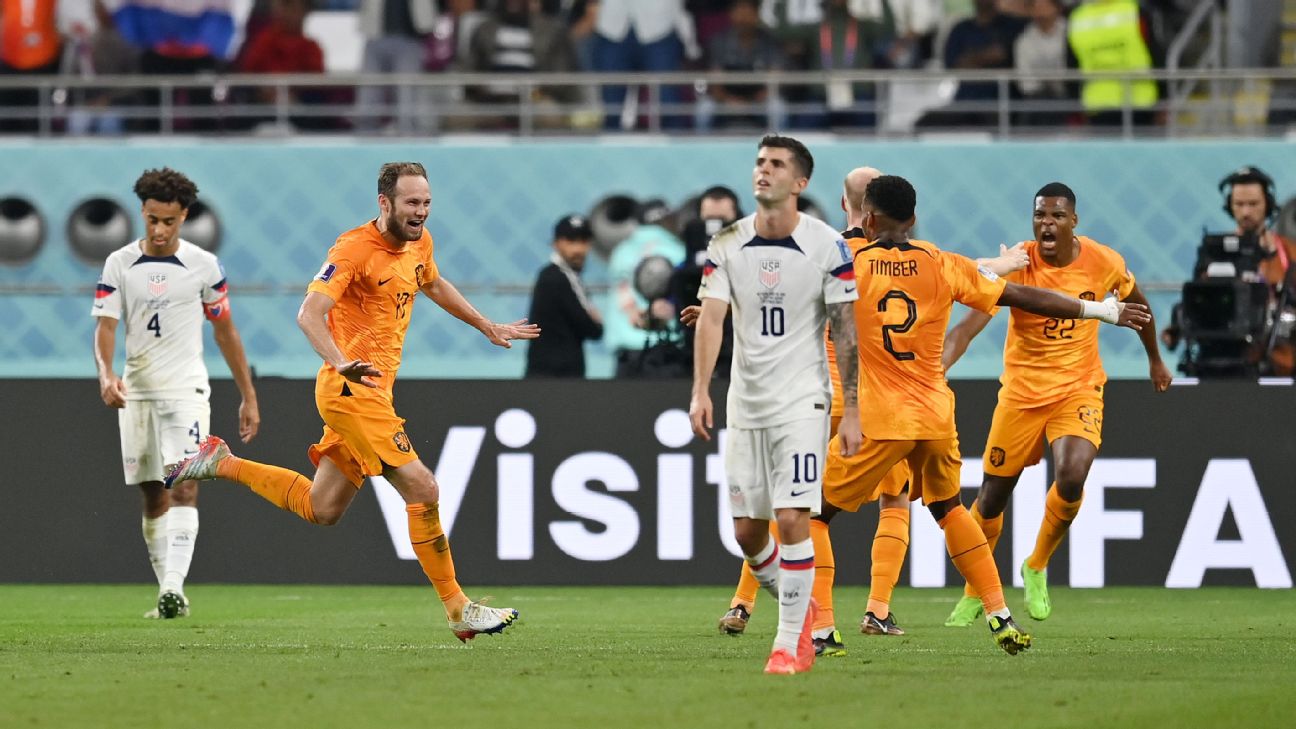
The second goal, scored by Daley Blind just before halftime, was the perfect encapsulation of Berhalter’s tactical failure. Once again, Dumfries found space down the right flank—the same space he had exploited for the first goal. Once again, the American defense was caught flat-footed. Once again, the Dutch made it look easy.
“A game like that it comes down to the margins obviously,” Adams said after the match, but this wasn’t about margins—this was about being completely outclassed by superior tactics and coaching.
Halftime Adjustments: Too Little, Too Late
Berhalter’s halftime substitutions—bringing on Giovanni Reyna for Jesús Ferreira—represented a tacit admission that his starting lineup and tactical approach had failed. But the damage was already done, and the changes smacked of desperation rather than tactical acumen.
The Reyna substitution itself raised uncomfortable questions about the coach’s man-management and decision-making throughout the tournament. Why had the Borussia Dortmund star been relegated to the bench for crucial matches? The whispers about tension between player and coach, about family dynamics and personal conflicts, cast a shadow over what should have been a purely football decision.
The Netherlands, meanwhile, made their own adjustments with the confidence of a team that knew they were in complete control. Steven Bergwijn and Teun Koopmeiners entered the match, adding fresh legs and tactical flexibility that Berhalter’s rigid system couldn’t match.
Second Half False Hope: Wright’s Moment of Magic
The Americans showed more life in the second half, creating chances and putting pressure on the Dutch defense. Tim Ream’s effort cleared off the line and McKennie’s miss over the bar suggested that a comeback might be possible, but these were isolated moments of quality rather than systematic improvement.
Matt Turner’s double save—first denying Koopmeiners, then Bergwijn’s header—was the kind of goalkeeping heroics that keeps teams in matches they have no business being in. The Arsenal goalkeeper was magnificent throughout, making save after save to prevent what could have been a historically embarrassing defeat.
Haji Wright’s bizarre goal in the 76th minute—a flicked finish that looped over Noppert—provided a moment of hope and showcased the kind of individual brilliance that this American generation possesses. But even in that moment of celebration, the tactical reality was clear: this was a lucky break, not the product of systematic attacking play.
“We can show that we can hang with the best teams in the world,” Adams said after the match, but the evidence suggested otherwise. The Americans were hanging on, not hanging with.
Dumfries’ Dagger: Dutch Class Ends American Dreams
Denzel Dumfries’ 81st-minute goal was the perfect summary of the match: Dutch tactical superiority producing a simple, clinical finish. Blind’s cross from the left was inch-perfect, and Dumfries’ finish was as inevitable as it was devastating.
The PSV Eindhoven defender had been the Americans’ tormentor all match long, creating both first-half goals and finishing the job himself. His performance was a masterclass in modern wing-back play, showcasing the tactical sophistication that separated the two teams.
For the Americans, the goal represented the end of their World Cup dream and the beginning of uncomfortable questions about their coach’s future.
Berhalter’s Tactical Rigidity: A Coach Out of His Depth
Throughout the tournament, Berhalter’s tactical inflexibility had been masked by the quality of his players and the weakness of the opposition. Against Wales, individual brilliance from Timothy Weah had papered over tactical cracks. Against England, defensive organization and Matt Turner’s goalkeeping had earned a creditable draw. Against Iran, Christian Pulisic’s heroics had secured advancement.
But against the Netherlands, there was nowhere to hide. Van Gaal’s tactical setup neutralized every American strength while exploiting every weakness. The Dutch coach’s game plan was executed to perfection, while Berhalter looked like a man with no answers to the questions being asked.
The American coach’s post-match comments were telling: “This is a difficult one to handle, it’s such a good group of guys, such a close group of guys, and we came up short today, but not for a lack of trying, not for a lack of effort.”
Effort was never the question. Tactical preparation, game management, and coaching quality were the issues, and Berhalter’s words suggested a man who still didn’t understand why his team had been so comprehensively outclassed.
The Reyna Controversy: Questions About Leadership
The elephant in the room throughout this World Cup has been the handling of Giovanni Reyna. The Borussia Dortmund star’s limited playing time raised questions about Berhalter’s man-management, tactical awareness, and ability to handle the personalities within his squad.
Reports of tension between coach and player, whispers about family dynamics and personal conflicts, created a toxic atmosphere that undermined team unity at the worst possible time. Whether these issues affected performance on the pitch is debatable, but they certainly affected perception off it.
Reyna’s introduction at halftime against the Netherlands—when the match was already lost—felt like too little, too late. His creativity and technical ability were exactly what the Americans needed against Dutch tactical sophistication, but Berhalter’s decision-making had already cost his team the match.
Defensive Disasters: Individual Errors and System Failures
The American defense, so solid against Iran and England, crumbled under Dutch pressure. Walker Zimmerman and Tim Ream, veterans who should have provided leadership and organization, looked overwhelmed by the pace and movement of Dutch attackers.
Sergiño Dest and Antonee Robinson, usually reliable in wide areas, were consistently beaten by Dutch wing-backs who seemed to have all the time and space in the world. The full-backs’ positioning and decision-making were poor throughout, contributing to all three Dutch goals.
But these weren’t just individual errors—they were system failures that reflected poor coaching and tactical preparation. The Americans looked like a team that hadn’t been properly prepared for the tactical challenges they would face.
Midfield Overrun: Adams, McKennie, and Musah Overwhelmed
The American midfield trio, which had been so impressive throughout the group stage, was completely overrun by Dutch tactical superiority. Adams, McKennie, and Musah found themselves outnumbered and outmaneuvered by a Netherlands team that controlled the tempo and rhythm of the match from start to finish.
Frenkie de Jong’s performance was particularly impressive, showcasing the kind of technical ability and tactical intelligence that the Americans couldn’t match. The Barcelona midfielder’s passing, positioning, and game management were exemplary, highlighting the gulf in class between the two teams.
Attacking Impotence: Pulisic Isolated, Ferreira Invisible
Christian Pulisic, the Americans’ best player and biggest threat, was systematically neutralized by Dutch tactical discipline. The Chelsea winger found himself isolated, outnumbered, and unable to create the kind of chances that had troubled weaker opposition.
Jesús Ferreira’s performance was particularly disappointing. The FC Dallas striker was invisible for 45 minutes before being substituted at halftime, highlighting Berhalter’s poor personnel decisions and tactical preparation.
Timothy Weah provided some threat down the right flank, but his efforts were largely ineffective against a Dutch defense that seemed to anticipate every American move.
Turner’s Heroics Mask Deeper Problems
Matt Turner’s performance was the one bright spot in an otherwise dismal American display. The Arsenal goalkeeper made save after save to keep the scoreline respectable, but his heroics only masked the deeper tactical and coaching problems that plagued his team.
Turner’s distribution was excellent, his shot-stopping was world-class, and his positioning was exemplary. But even the best goalkeeper in the world can’t overcome tactical naivety and coaching deficiencies.
Van Gaal’s Masterclass: How to Dismantle American Soccer
Louis van Gaal’s tactical approach was a masterclass in tournament football. The Dutch coach identified American weaknesses, systematically exploited them, and made the necessary adjustments to secure victory.
The 3-4-1-2 formation was perfectly designed to neutralize American strengths while maximizing Dutch advantages. The wing-backs provided width and attacking threat, the midfield controlled possession and tempo, and the front two caused constant problems for the American defense.
Van Gaal’s in-game management was equally impressive. His substitutions maintained Dutch control while adding fresh legs and tactical flexibility. His team’s execution of the game plan was flawless, highlighting the difference between world-class coaching and tactical mediocrity.
The Uncomfortable Questions: Is Berhalter the Answer?
The defeat to the Netherlands raises fundamental questions about Gregg Berhalter’s future as USMNT coach. His tactical rigidity, poor game management, and questionable personnel decisions have been exposed on the world’s biggest stage.
The Reyna controversy, the defensive disasters, the midfield overrun, and the attacking impotence all point to coaching deficiencies that can’t be ignored. This golden generation of American players deserves better than tactical naivety and coaching mediocrity.
The 2026 World Cup on home soil represents the biggest opportunity in American soccer history. Can this team reach its potential under Berhalter’s leadership? Based on this performance, the answer seems increasingly clear: probably not.
Statistical Embarrassment: The Numbers Don’t Lie
The statistics from this match tell a damning story. Despite having 58.4% possession, the Americans created fewer clear-cut chances and looked less dangerous throughout. The Dutch were clinical with their opportunities, scoring three goals from just 11 shots.
The Americans’ 17 shots flattered their performance—most were speculative efforts from distance or half-chances created through individual brilliance rather than systematic attacking play.
The corner kick count (5-4 in favor of the Americans) and shots on goal (8-6 in favor of the Americans) suggest a closer match than occurred. The Dutch controlled the game from start to finish, allowing the Americans to have the ball in non-dangerous areas while remaining clinical in their attacking play.
Individual Performances: Heroes and Zeros
Matt Turner (8/10): The only American who can hold his head high. Made several world-class saves to prevent a humiliating scoreline.
Tyler Adams (4/10): The captain looked overwhelmed by Dutch tactical sophistication. His leadership was questioned throughout.
Christian Pulisic (5/10): Isolated and ineffective against Dutch tactical discipline. Showed flashes of quality but couldn’t influence the match.
Weston McKennie (3/10): Completely overrun in midfield. His physicality was neutralized by Dutch technical ability.
Walker Zimmerman (3/10): Poor positioning and decision-making contributed to Dutch goals. Looked out of his depth.
Jesús Ferreira (2/10): Invisible for 45 minutes before being mercifully substituted. A tactical mismatch from the start.
Looking Forward: The 2026 Question
The 2026 World Cup on home soil should be the pinnacle of this generation’s career. But can they reach their potential under Berhalter’s leadership? This performance suggests they cannot.
The tactical naivety, poor game management, and questionable personnel decisions that plagued this tournament will only be magnified against better opposition. If American soccer is serious about competing at the highest level, serious questions must be asked about the coaching staff.
This golden generation deserves better. They deserve a coach who can maximize their potential, not one who holds them back with tactical rigidity and coaching mediocrity.
The Verdict: A Wasted Opportunity
The 3-1 defeat to the Netherlands wasn’t just a loss—it was a wasted opportunity to announce American soccer’s arrival on the world stage. Instead of validation, we got humiliation. Instead of tactical sophistication, we got naivety. Instead of coaching excellence, we got mediocrity.
Gregg Berhalter’s future as USMNT coach must be seriously questioned. This golden generation have the talent to compete with anyone, but they need coaching that matches their ability. Based on this performance, they’re not getting it.
The Netherlands showed what tactical sophistication and coaching excellence can achieve. The Americans showed what happens when talent is wasted by poor preparation and tactical naivety.
The World Cup dream is over, but the questions about American soccer’s future are just beginning. Can this generation fulfill its potential? Not under the current leadership.
The embarrassment in Qatar demands answers. American soccer deserves better than tactical bankruptcy and coaching mediocrity. The time for change is now.
Discover more from Bad Dawg Sports - Global Sports Coverage & Analysis
Subscribe to get the latest posts sent to your email.